
Last updated August 25, 2026
Free on-site gate assessment - hinges, posts, and your LiftMaster or Nice gate operator checked before anything is quoted
The assessment is free and the quote is the invoice.
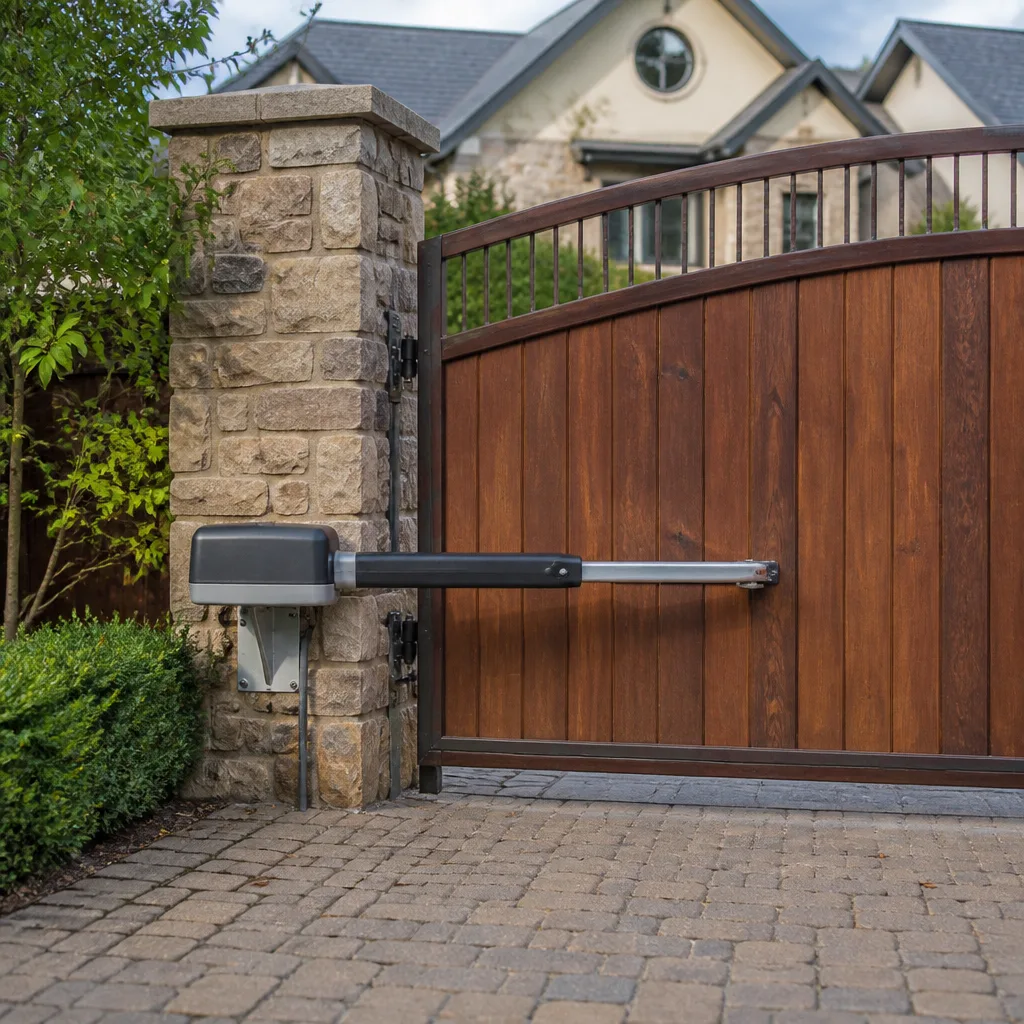
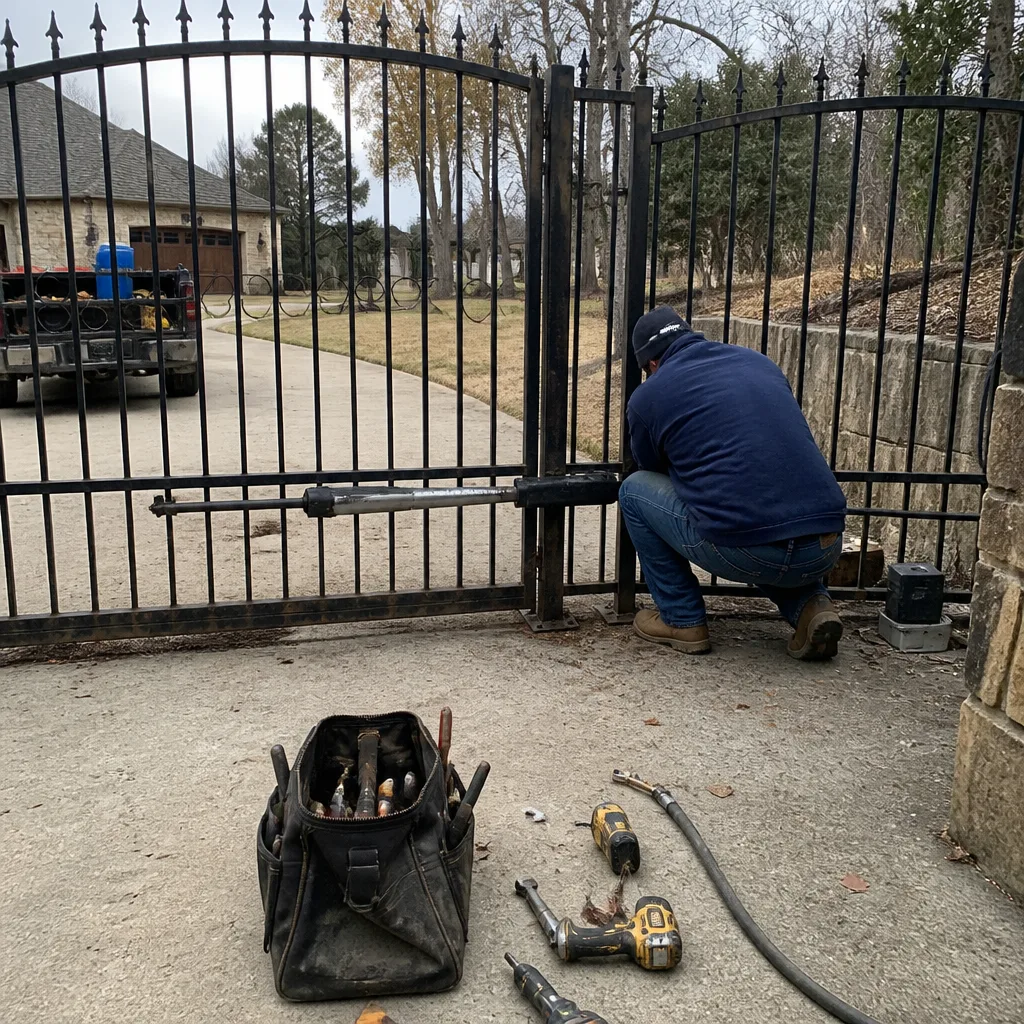 Before
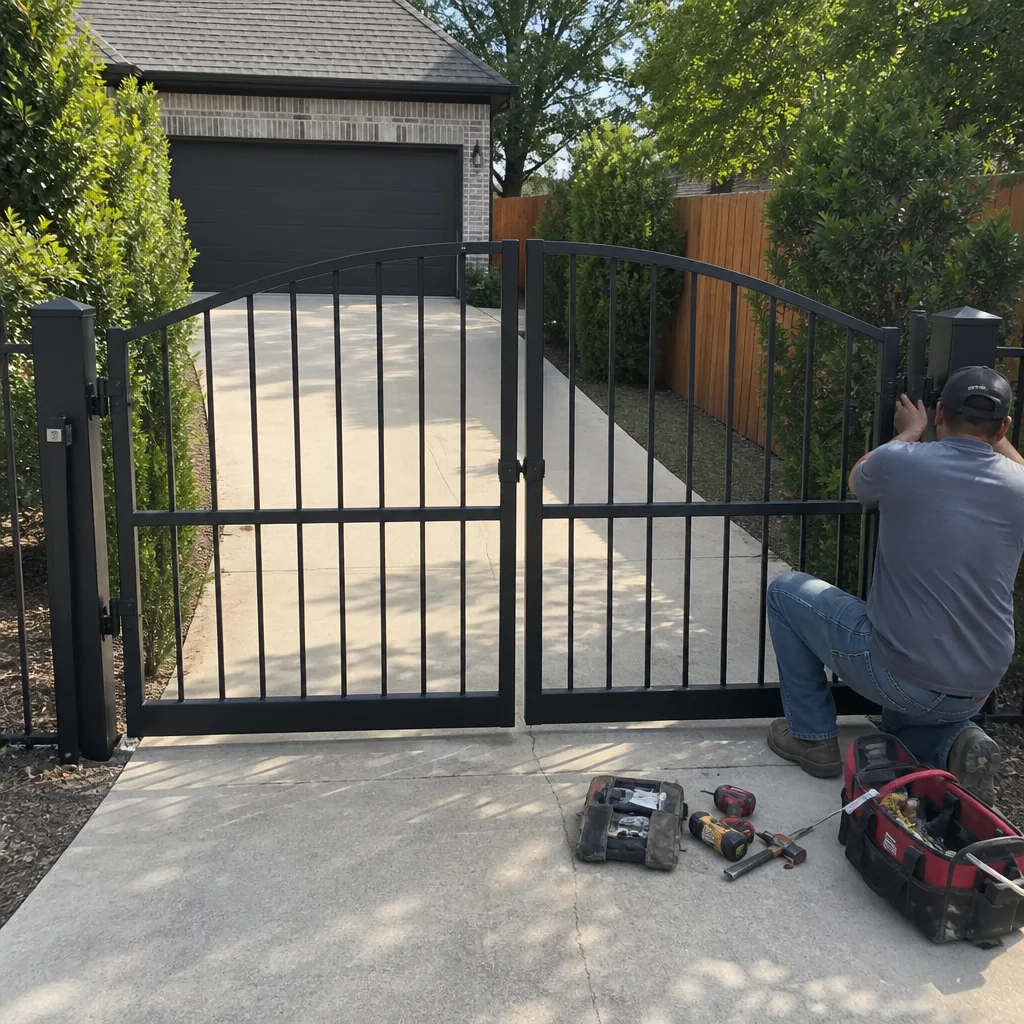 After
After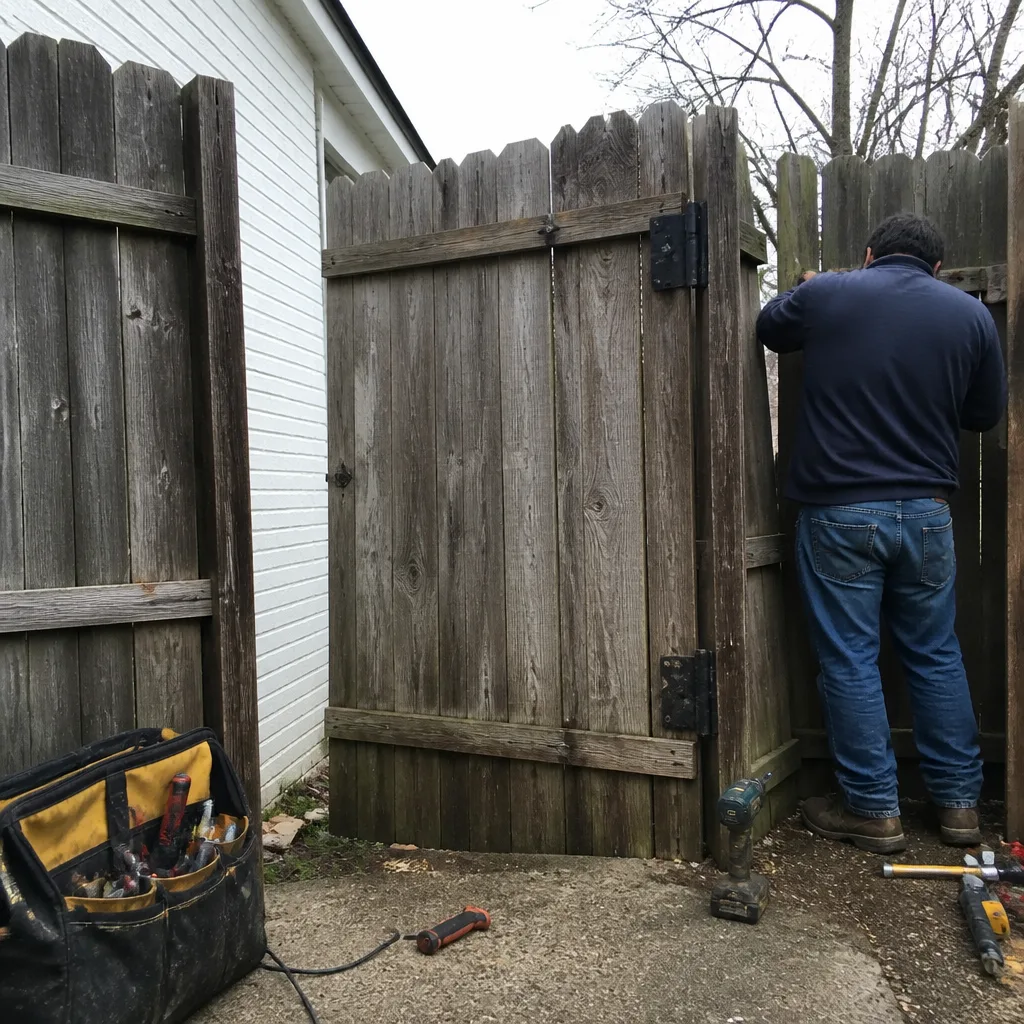 Before
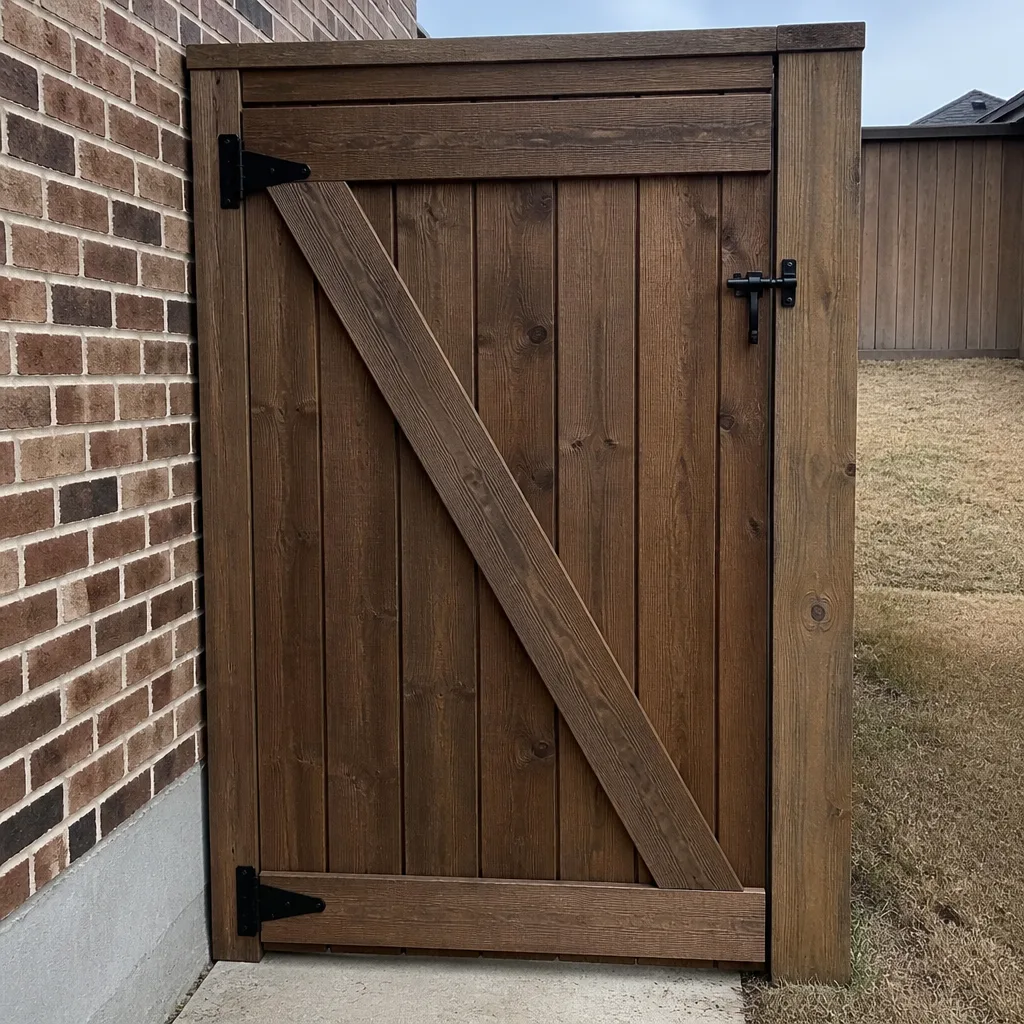 After
After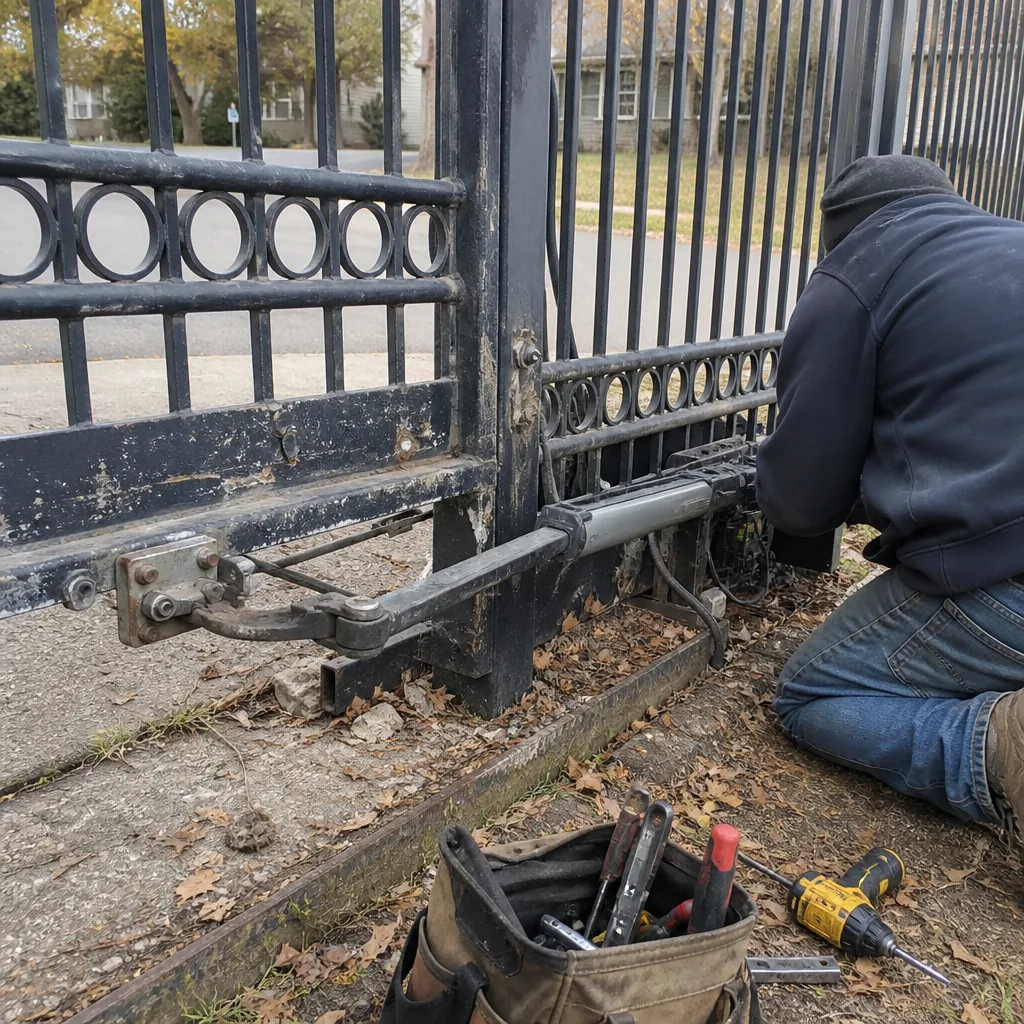 Before
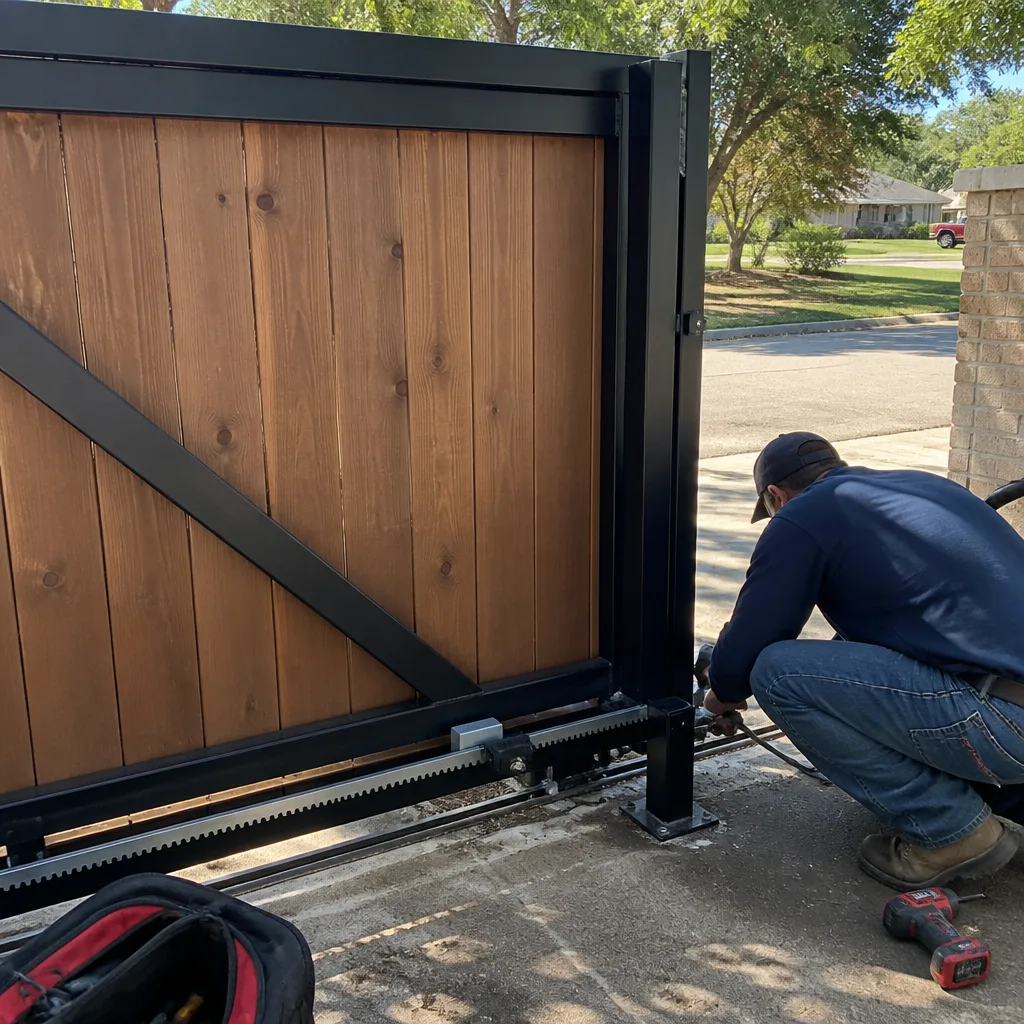 After
AfterGate Repair Maintenance Checklist for Little Elm Homeowners
Most gate failures in Little Elm don’t start with a dramatic snap. They start with a sag of half an inch, a pause of two seconds, a wheeze from the motor that was not there last spring. By the time a gate refuses to open on a Monday morning, the problem has usually been building for months, and the repair bill reflects it. This guide walks through the maintenance tasks that catch those small failures early, the seasonal checks that matter in North Texas clay soil and summer heat, and the point where calling a professional is cheaper than the parts you will ruin by guessing.
Quick Answer
A proper gate maintenance routine for Little Elm homeowners comes down to quarterly hinge and weld inspections, monthly track and wheel cleaning, seasonal opener and safety-edge testing, and immediate attention to any change in sound, speed, or movement. If you do nothing else, lubricate the hinges every 90 days and test the auto-reverse safety edge monthly. Those two habits prevent the majority of gate failures we see in Little Elm.
Table of Contents
- Why Gates Fail in Little Elm More Than in Other Towns
- The Monthly 10-Minute Gate Check
- Seasonal Maintenance for North Texas Climate
- Hinges, Welds, and the Metal That Holds It All
- Gate Opener and Motor Care: The Electrical Side
- Safety Edges, Photo Eyes, and Sensors
- Wheels, Tracks, and Ground Hardware
- Common Mistakes to Avoid
- When to Call a Professional
- Frequently Asked Questions
Why Gates Fail in Little Elm More Than in Other Towns
Little Elm sits on the western edge of the Blackland Prairie, where the soil is a heavy, expansive clay that swells when wet and shrinks when dry. That movement is relentless. It shifts gate posts, racks concrete footings, and torques the steel frame in ways that a gate in rockier soil never experiences. A gate that hung perfectly square in March may be binding at the latch by August, not because anything broke but because the ground under the post moved a quarter inch.
Then there is the heat. Sensors baked above 110 degrees on the metal surface fail early. Capacitors in opener boards wear faster. Grease thins and drips out of hinge pins, leaving metal on metal. And the wind off Lake Lewisville carries fine dust that works its way into rollers, tracks, and keypads on the lake side of Frisco Road and along Eldorado Parkway. A Little Elm gate lives a harder life than the same gate would in Plano or Frisco, purely from environment.
Because of this, the maintenance schedule that works for a gate in another town is not enough here. Little Elm homeowners need to check certain components more often. The good news is that most of these checks take less than ten minutes once a month.
The Monthly 10-Minute Gate Check
This is the single highest-value habit in this guide. Once a month, walk your gate through one full open cycle and one full close cycle while you watch and listen. That is the whole exercise. You are not fixing anything. You are learning the normal sound, speed, and movement of your specific gate, so that when something changes, you notice it the first week instead of the third month.
Here is the exact sequence we recommend to homeowners in Little Elm:
- Listen to the motor. A healthy opener hums steadily. A straining motor rises in pitch toward the end of the cycle. A clicking or buzzing sound means the capacitor or limit switch is working harder than it should.
- Watch the gate speed. Count roughly how long a full open cycle takes. Write it down once. If the gate is ten percent slower next month, that is not your imagination. That is additional friction somewhere.
- Look at the gap at the hinges. Stand at the hinge post and watch the gate move. The gap between the gate and the post should stay even from top to bottom. If it narrows or widens during travel, the post is moving or a weld is failing.
- Check the ground clearance. At the latch end, the gate should sweep at the same height it always has. A drop of half an inch means the gate has settled or a weld at the hinge has cracked.
- Test the manual release. Every opener has a release lever or key. Pop it once a month and swing the gate by hand. It should move freely without grinding. This also verifies that the release mechanism itself still works when you actually need it.
- Press the safety edge or photo eye. With the gate closing, wave your hand through the photo eye beam or press the safety edge strip. The gate should reverse immediately. Do not skip this. This is the check that protects children, pets, and delivery drivers.
Keep a note on your phone or a piece of paper in the garage. Month one gives you the baseline. Every month after that is a comparison. A gate that never changes is a gate that is not failing. A gate that changes slowly is giving you advance notice, which is the cheapest repair you will ever schedule.
Seasonal Maintenance for North Texas Climate
Little Elm gets a little of everything: triple-digit summers, freezes that dip into the teens, spring storm fronts that soak the clay, and stretches of dry wind. Each season loads the gate differently. A seasonal routine that anticipates the load beats a reactive one that waits for the failure.
Spring: Drying Out and Straightening Up
After the winter rains, the clay around your gate posts is swollen and soft. This is the season when posts that were already marginal begin to lean. Walk around each post and check for a gap between the concrete footer and the soil, which indicates the post has been heaving. Check the latch alignment, since a post that moved a quarter inch over winter will make the latch bind. Clean out the bottom track if you have a sliding gate, since spring debris and mud accumulate fast. Lubricate hinges and rollers after the last freeze is behind us, not before.
Summer: Heat and Dust
The summer heat in Little Elm is hardest on the opener. The control board, capacitor, and transformer inside the operator box bake all day. If your opener cabinet is in direct afternoon sun on a west-facing wall, the internal temperature can exceed 140 degrees. That shortens the life of every electronic component. Shade the cabinet if you can. Check that the cabinet vents are clear of dirt and wasp nests. Dust from the lake side settles on photo eye lenses; wipe them with a dry cloth monthly through July and August. Check that grease on the hinges has not liquefied and dripped away.
Fall: Pre-Winter Tightening
Before the first freeze, tighten every bolt you can see on the gate frame, hinge plates, and opener mount. The thermal cycling of summer racks fasteners loose. Check the chain or belt tension on the opener, since a loose chain slaps and wears. Test the battery backup if your opener has one. When the power goes out in a January ice storm, that is when you learn the battery was dead since August.
Winter: Cold and Contraction
Metal shrinks in the cold. A gate that swung fine in October may rub the latch post in January because the steel contracted. Look for fresh scrape marks on the gate and post. Keep the track clear of ice, but never pour hot water on a frozen track, since the thermal shock can crack cast components. And do not force a frozen gate. If it resists, the motor is fighting ice, and forcing it can strip the gearbox.
Hinges, Welds, and the Metal That Holds It All
The metal is the part nobody thinks about until it is on the ground. Every automated gate is a steel or aluminum frame hanging on two or more hinge points. Every ounce of that weight, including the wind load off Lewisville Lake, passes through the hinges and the welds. When we are called to a failed gate in Little Elm, more than half the time the problem is not the motor, even though the motor is what the homeowner hears straining. The motor is working hard because a hinge seized, a weld cracked, or a post leaned.
Quarterly, inspect and maintain the following:
- Hinge pins and barrel hinges: They should be greased, not oiled. Oil runs. Grease stays. Apply a lithium or marine grease to the pin and work the gate through its range to distribute it.
- Weld joints: Look for hairline cracks at every corner where a horizontal rail meets a vertical stile, and where the hinge plate meets the gate frame. A crack smaller than an inch can be welded in place before it becomes a snapped stile. A crack that goes unaddressed through a freeze-thaw cycle will grow.
- Rust and paint: North Texas is not the Rust Belt, but a scratch that exposes bare metal will rust here too. Wire-brush any rust spot, hit it with a rust converter, and touch it up. A fifteen-dollar paint repair now saves a five-hundred-dollar structural repair in five years.
- Gate sag measurement: Measure the height of the latch end from the ground once a quarter. A quarter-inch drop is a bearing or hinge issue. A half-inch drop is a weld that has started to fail. An inch and a half is a gate that can fall.
This is the maintenance area where we see the most do-it-yourself injury risk. A gate under tension stores energy. If a hinge or post lets go while someone is underneath or behind the gate, the results are serious. Do not attempt to cut, weld, or loosen a loaded hinge without the gear and experience to do it safely. The Ironworks Gate Co. home team handles hinge, weld, and structural work as our core craft, and we recommend leaving the load-bearing repairs to a shop that does this daily.
Gate Opener and Motor Care: The Electrical Side
The opener is the component that most often triggers the service call, and it is also the component that responds best to routine care. Little Elm heat and the power-quality issues that come with a fast-growing grid both shorten opener life. But most opener failures we see have a simple preventable trigger: a gate that binds, causing the motor to pull high amps, which cooks the capacitor and eventually the board. The motor is usually the victim, not the cause.
Monthly opener checks take five minutes:
- Listen for change. A smooth, even hum is good. A grinding, clacking, or straining sound means the mechanical side is making the motor work too hard.
- Watch the limit settings. The gate should stop fully open and fully closed without slamming or bouncing. If it overruns or stops short, the limits have drifted and need recalibration.
- Inspect the drive chain or belt. Chains should have a slight sag but not flop. Belts should be tight with no cracks or missing teeth.
- Check the cabinet. Look for ants, mud dauber nests, corrosion, and loose wiring. A surprising number of opener failures in Little Elm are caused by fire ants setting up a colony inside the control cabinet.
- Run a full cycle on battery backup. Unplug the opener and run the gate open and close once. If the battery will not hold the cycle, replace it before the next outage.
Brand matters less than maintenance. Whether your opener is a LiftMaster, an Elite, or a Mighty Mule, the failure patterns are similar: the gate binds, the motor strains, heat does the rest. The one brand-specific issue we do note with older FAAC hydraulic units is that the oil level and oil condition matter. If the oil is black and smells burnt, the unit is running hot and needs service before it seizes. Most residential openers in Little Elm are electromechanical, not hydraulic, but a few of the larger estate gates on the lake side still run the old FAAC hydraulic swing operators. They are good machines when the oil is maintained.
Safety Edges, Photo Eyes, and Sensors
An automated gate is the only piece of equipment on your property designed to move a heavy object through space on its own. The safety systems are what keep that from being dangerous. In Texas, an automated gate installer is required to equip the gate with primary and secondary entrapment protection, typically a photo eye beam across the gate opening plus a contact safety edge on the moving gate. These systems must work. When they fail, they tend to fail quietly, and you will not know until someone or something is in the path.
Here is the monthly test procedure:
- Photo eye test. Start the gate closing, then wave your hand through the beam. The gate must stop and reverse. If it hesitates, slows, or fails to reverse, clean the lens and re-test. If it still fails, the sensor needs alignment or replacement.
- Safety edge test. With the gate closing, press the rubber edge strip. The gate must reverse on contact. A stiff, cracked, or punctured edge will not compress correctly. A safety edge that is brittle from sun exposure is a failed safety edge.
- Obstruction sensitivity test. Place a rolled towel or a soft object in the gate path and close the gate. The opener’s obstruction sensing should detect the resistance and reverse. This tests the force setting on the opener itself.
- Entrapment zone check. Walk the full path of the gate and look for gaps, pinch points, or spaces where a small hand could fit. A gate that has settled or shifted may have created new pinch points that did not exist at installation.
If any safety test fails, stop using the gate in automatic mode until it is repaired. A gate that cannot reverse on contact should be operated only in manual mode, and you should call for service. Safety system work is not a handyman job. The sensors, force settings, and edge sensitivity need to be adjusted together, in sequence, by someone who has done it a hundred times.
Wheels, Tracks, and Ground Hardware
Sliding gates, which are common on the larger lots and acreage properties around Little Elm, ride on a steel track with guide rollers and a cantilever or bottom-supported wheel assembly. The track is the gate’s foundation. When the track is dirty, the rollers bind. When the rollers bind, the gate shudders and the motor works against the resistance. When the track is out of level because the ground shifted, the gate climbs and drags with every cycle.
Quarterly track and wheel maintenance:
- Clean the track. Use a stiff brush or a leaf blower to clear dirt, gravel, acorns, and grass clippings out of the track channel. Do not use a pressure washer inside the track; it forces water into the roller bearings and washes away the grease.
- Inspect the rollers. Rollers should spin freely with no side-to-side play. A roller that wobbles is wearing its bore and will fail soon. Replace rollers in pairs so the gate stays plumb.
- Check the track level. Lay a four-foot level on the track at several points. The track should be level side to side and have no humps or dips along its length. A dip of even half an inch makes the gate work harder every cycle.
- Lubricate the rollers. A dry roller is a quickly dying roller. Grease or heavy oil on the roller bearings quarterly, more often in the dusty summer months.
- Tighten the track fasteners. The expansion and contraction of the North Texas clay loosens track bolts over time. Walk the track and snug every fastener that has backed out.
For swing gates, the ground hardware is simpler: a couple of drop rods or a center catch that holds the gate closed when the opener releases. Keep those clean and lightly greased. A drop rod that fills with dirt stops seating properly, and the gate then rattles against the stop, which damages the latch over time.
Common Mistakes to Avoid
- Using WD-40 on hinges and rollers. It is a solvent, not a lubricant. It strips what grease was there and leaves the metal dry within a week. Use lithium grease or a dedicated gate lubricant instead.
- Ignoring a slow gate. A gate that moves slower than it did last season is a gate telling you something is wrong. Most Little Elm homeowners wait until the gate stops entirely, by which point the bill is bigger and the repair is more involved.
- Tightening a chain that was already tight. An over-tightened chain loads the motor shaft and wearing bearings. The chain needs slack. If the chain is slapping, tighten it slightly. If the motor is groaning, loosening the chain a touch can sometimes save an otherwise healthy opener.
- Skipping the photo eye test because the gate “has always worked.” Safety devices fail in ways that are not visible. A photo eye that fails is invisible until someone is in the path. Test it monthly.
- Re-greasing a rusty hinge without cleaning it first. Grease over rust traps the rust and lets it keep eating. Clean the rust off, treat the steel, then lubricate. In Little Elm’s humid spring months, this order matters.
- Attempting to weld a cracked gate frame without relieving load. A gate under tension can shift violently when a cracked weld is cut or welded. Without proper bracing, the gate can shift, pinch, or fall. This is a job for a welding shop with gate experience.
- Replacing an opener without fixing the underlying gate problem. The opener is usually the victim, not the cause. If the gate binds, the new opener will fail too, just on a longer clock.
When to Call a Professional
Some maintenance tasks are genuinely do-it-yourself. Cleaning a track, greasing a hinge, testing a photo eye. Others are not. If the gate post has visibly leaned, if a weld is cracked, if the opener board is failing, if the gate has dropped more than half an inch, or if any safety test fails, call someone who does this work daily. A gate that weighs four hundred pounds and is under spring or motor tension can hurt you. The most expensive gate repair in Little Elm is the one that comes after a failed DIY repair. Ironworks Gate Co. offers free estimates in Little Elm, and every repair carries our 90-Day Done Right Promise in writing. Call (432) 547-6481 and we will send someone who knows the difference between a hinge that needs grease and a post that needs to be re-set.
Frequently Asked Questions
Quarterly, and more often in the dusty summer months. Use a lithium or marine grease rather than a spray lubricant. Grease stays in place through the heat and does not wash away the way oil does. If your gate squeaks between lubrication intervals, that is the gate telling you the interval is too long.
A seasonal tune-up from Ironworks Gate Co. is $89, which includes the full checklist, lubrication, safety system testing, and written notes on anything that is wearing. That is less expensive than a single after-hours service call, and it catches most problems while they are still small and cheap. Call (432) 547-6481 to schedule yours.
Most sagging gates in Little Elm trace back to three causes: a hinge pin that has worn or seized, a weld that has cracked at the hinge plate, or a post that has shifted in the clay soil. Each has a different fix and a different price. The first step is a proper diagnosis, not a guess. A gate specialist can tell you in one visit which one you have.
You can reset a breaker, clean a photo eye lens, and replace a keypad battery. But opener board, capacitor, limit switch, and force-setting work is not a beginner’s project. The electrical side carries line voltage and the gate carries stored mechanical energy. If the problem is not an obviously tripped breaker, call for professional service.
A properly maintained residential opener should last 10 to 15 years, with the heat and the clay soil at the shorter end of that range. The openers that fail early in Little Elm are almost always attached to gates that were binding or were never lubricated. The opener fails because the gate fought it for years.
We are trained and equipped to service nine major gate-automation brands, including LiftMaster, FAAC, BFT, Linear, Viking, Ghost Controls, DoorKing, Elite, and Mighty Mule. Whatever opener is on your driveway, we have likely worked on that model many times. The correct fix on the first visit, not a guess and a return trip.
The Bottom Line
A gate is a simple machine: metal, hinges, wheels, a motor, and a brain. Every failure it will ever have announces itself in advance, in the form of a new sound, a slower cycle, a sagging corner, or a safety test that fails. The Little Elm homeowners who get the longest life from their gates are the ones who walk the gate through its cycle once a month and act on what they see. Ten minutes a month, a $89 seasonal tune-up, and a refusal to ignore small problems before they become big ones. That is the entire maintenance philosophy. Done right, and backed in writing.
Written by Victor Salinas, Owner at Ironworks Gate Co., serving Little Elm since 2013.