
Last updated August 25, 2026
Free on-site gate assessment - hinges, posts, and your LiftMaster or Nice gate operator checked before anything is quoted
The assessment is free and the quote is the invoice.
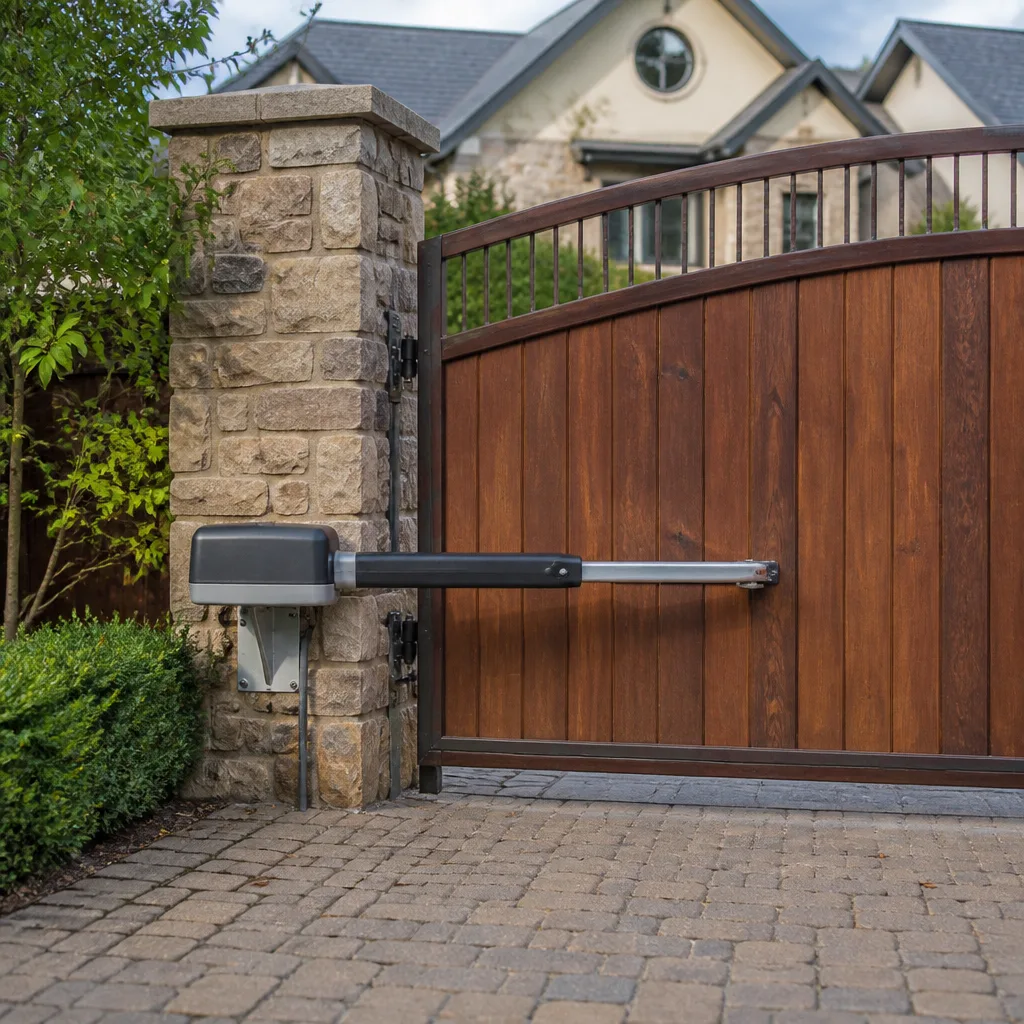
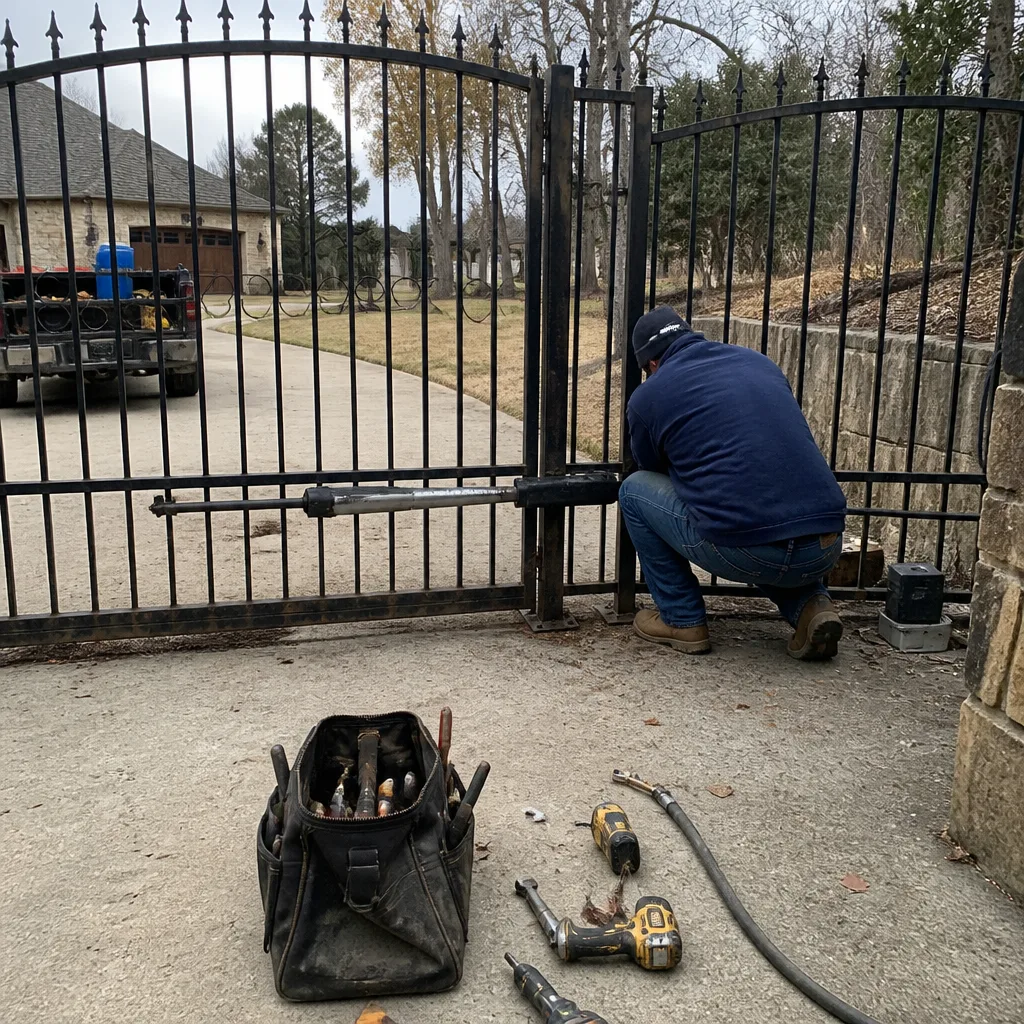 Before
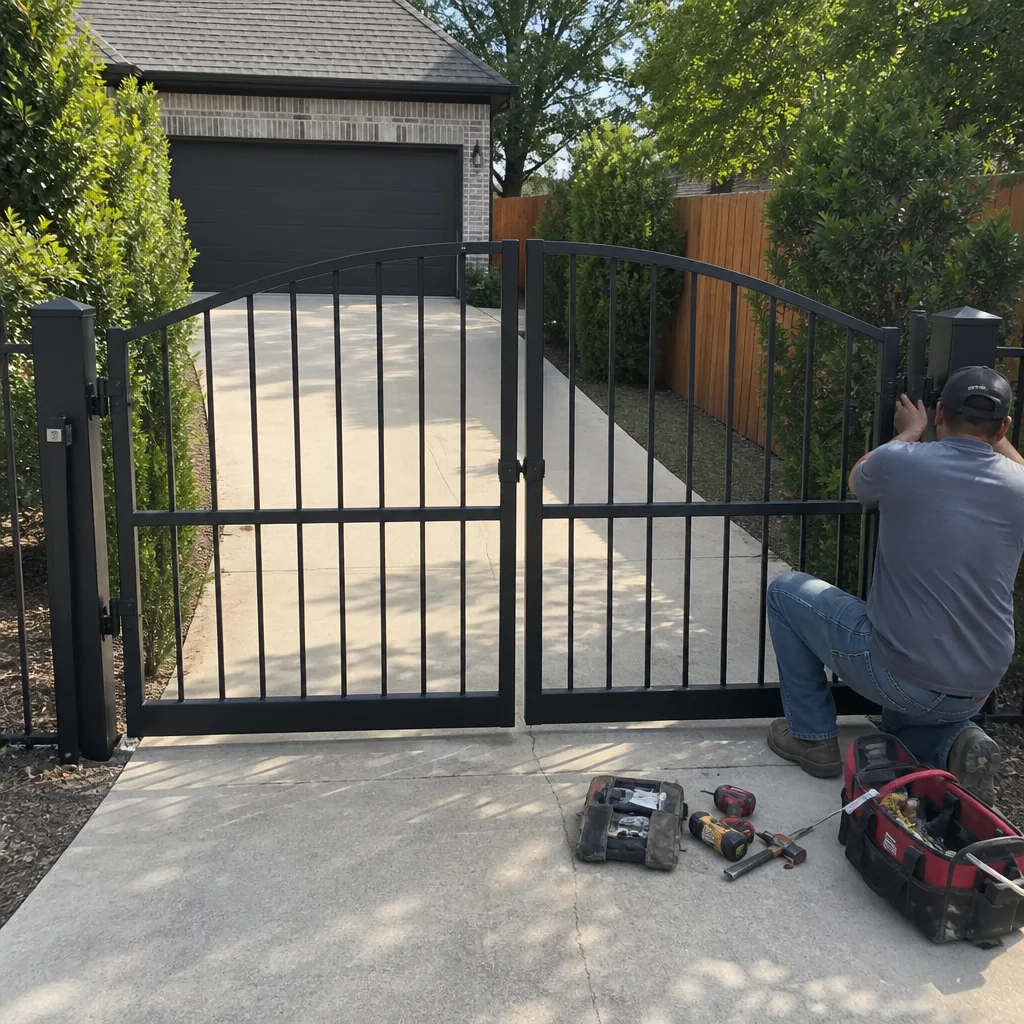 After
After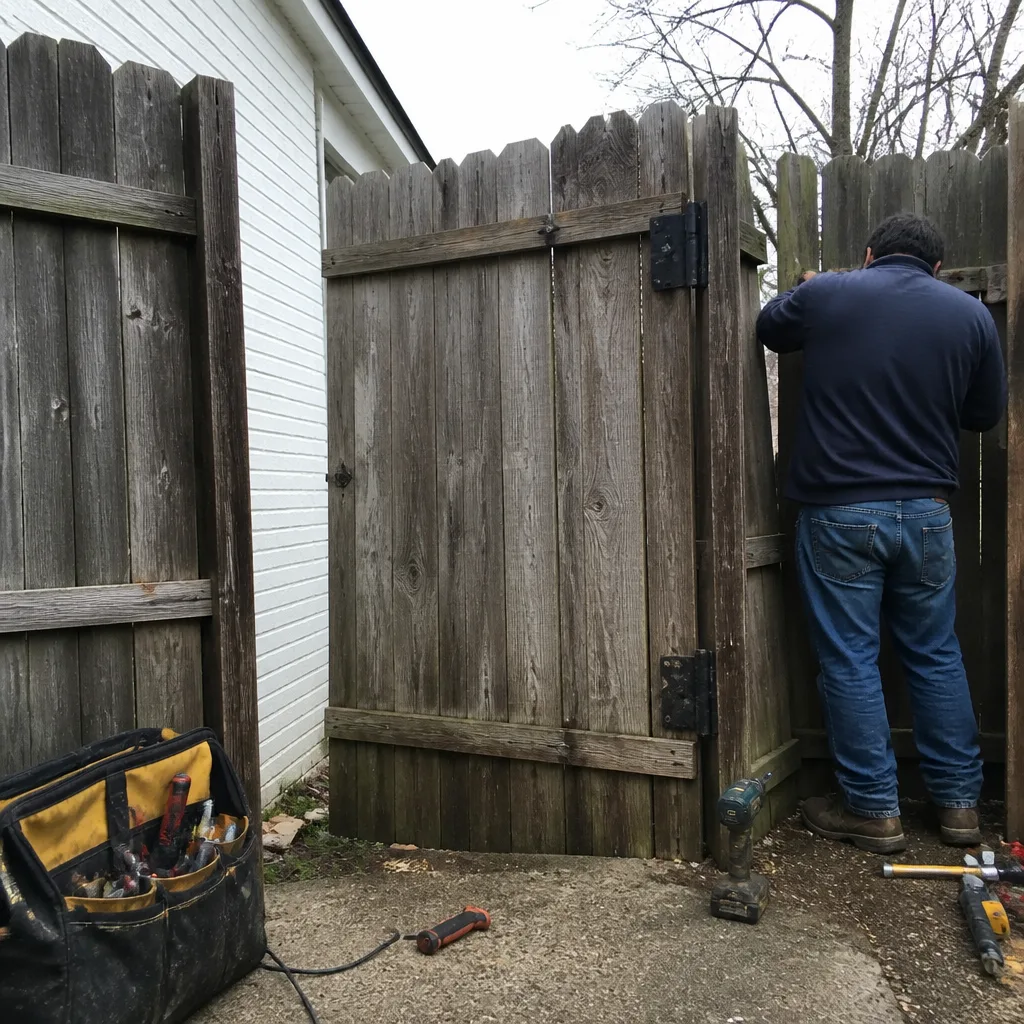 Before
 After
After Before
 After
AfterSeasonal Gate Repair Care for Little Elm: Year-Round Homeowner’s Guide
Most homeowners in Little Elm don’t think about their driveway gate until it refuses to open on a Monday morning. That’s the moment a $40 hinge adjustment becomes a $400 emergency call. This guide walks you through what actually happens to gates in North Texas across all four seasons, which problems you can catch early, and when a problem is better left to someone who does this work every day. If you own an automatic gate in Little Elm, the next fifteen minutes of reading will likely save you money this year.
Quick Answer
Seasonal gate care in Little Elm means checking hinges and lubrication in spring, watching for heat-related motor strain in summer, clearing leaf debris from tracks and sensors in fall, and tightening hardware after winter freezes. A simple visual inspection every six weeks and one $89 seasonal tune-up per year prevents roughly 80% of the gate failures we see in this area.
Table of Contents
- Why Little Elm Weather Is Hard on Gates
- Spring Gate Care: Recovery and Reset
- Summer Gate Care: Heat, Motors, and Battery Strain
- Fall Gate Care: Debris, Sensors, and Prep for Cold
- Winter Gate Care: Freezes, Contraction, and Creeping Misalignment
- The 10-Minute Monthly Inspection Routine
- What a Seasonal Tune-Up Actually Includes
- Common Mistakes to Avoid
- When to Call a Professional
- Frequently Asked Questions
- The Bottom Line
Why Little Elm Weather Is Hard on Gates
Little Elm sits on the eastern shore of Lewisville Lake, and that position creates a specific set of gate problems most national maintenance guides never mention. The lake effect pushes humidity through neighborhoods like Paloma Creek, Sunset Pointe, and Frisco Hills throughout spring and early summer. Humidity accelerates rust on powder-coated steel that looked pristine three years ago. Your gate’s hardware, especially the hinge pins and the bottom rail where sprinkler water collects, takes the worst of it.
Then come the temperature swings. A Little Elm winter can go from 65 degrees at noon to 19 degrees by midnight. Steel expands and contracts with those swings, and over four or five winters, that movement loosens the bolts holding your gate frame square. A gate that once closed with a soft click starts dragging on the concrete or hanging visibly crooked. None of this happens suddenly. It accumulates quietly until a component gives way.
The soil here adds another wrinkle. North Texas clay shifts significantly between wet and dry seasons. That matters because your gate posts are set in concrete, and the concrete sits in that clay. When the ground swells after spring rains, posts can tilt outward by a quarter inch. It sounds minor, but a quarter inch at the post translates to an inch or more at the far edge of a twelve-foot gate. Motors notice. Hinges notice. And you notice when the gate starts catching on the latch post.
In our experience across Little Elm, Frisco, and The Colony, the homeowners who schedule a seasonal check spend dramatically less on major repairs than those who wait for failure. A gate is a mechanical system, and like every mechanical system, it rewards attention and punishes neglect.
Spring Gate Care: Recovery and Reset
What Spring Does to Your Gate
Spring is the most active season for gate repair calls in Little Elm. The ground thaws and softens, posts shift, and gates that survived winter suddenly bind. We recommend the following sequence every March or early April, before the first serious heat arrives.
- Check the gate’s arc and clearance. Open the gate fully and watch it move. If it scrapes the ground at any point, note where. Scraping means a hinge, a post, or the gate frame itself has shifted.
- Inspect every hinge pin and bolt. Use a wrench, not just your eyes. Bolts that look seated often turn a quarter rotation before tightening. That quarter rotation is the difference between a square gate and a sagging one.
- Lubricate hinge points with a proper gate lubricant. Use a dry lubricant or lithium grease on hinges, not WD-40. WD-40 cleans but does not protect, and it dries within days.
- Test the safety sensors. Wave your hand in front of each photo eye while the gate closes. It should reverse immediately. If it hesitates or fails, clean the lenses with a soft cloth and test again.
- Run the gate through five full cycles. Listen for new grinding, clicking, or hesitation. A starter that struggles on cycle three is a motor nearing failure, not a tired battery.
Spring is also when oak pollen and cottonwood debris coat everything. That fine dust works into the gear teeth of your opener and the contact points of your keypad. A soft brush and a can of compressed air handled carefully will clear most of it. We see a lot of intermittent keypad failures in late March that turn out to be nothing more than pollen film across the contacts.
Summer Gate Care: Heat, Motors, and Battery Strain
Little Elm summers run hot, and heat is the quiet killer of gate automation. An operator sitting in direct afternoon sun on a 102-degree day can reach internal temperatures of 150 degrees or higher. Components rated for continuous duty at 90 degrees begin degrading fast at those temperatures. Capacitors swell. Soldered joints crack. DC motors draw extra amperage trying to move a heavier, heat-expanded gate, and that amperage becomes heat, which accelerates the failure cycle.
What to Watch in June Through September
- The gate slows noticeably on hot afternoons. Expansion makes every moving part tighter. If your gate crawls at 4 p.m. but moves fine at 9 p.m., the motor is working too hard. That’s a warning, not a quirk.
- The opener’s thermal protection trips. If the gate stops mid-cycle on a hot day and resumes minutes later, the motor overheated. Repeated thermal trips permanently damage windings. Get it looked at before July.
- Battery backup behavior changes. Heat shortens sealed lead-acid battery life dramatically. A four-year-old battery in a hot North Texas summer may only hold a fraction of its rated capacity.
One thing many homeowners miss: gate lubrication evaporates faster in summer. The grease you applied in April may be nearly gone by August, especially on exposed hinges facing west. Check hinge lubricant monthly during summer. A dry hinge under load scores the pin and wallows the hinge barrel, and that means welding or replacement rather than a five-minute greasing.
If your opener enclosure is in full afternoon sun, consider a simple shade structure: nothing elaborate, just something that keeps direct rays off the metal housing between 2 p.m. and 6 p.m. The temperature difference inside the enclosure can exceed 20 degrees, and heat failure is cumulative. Every degree you shed extends component life.
Fall Gate Care: Debris, Sensors, and Prep for Cold
Fall in Little Elm means two things for gates: leaves and falling pecans. The leaves jam track channels on sliding gates and pile against the base of swing gates, holding moisture against the steel overnight. The pecans, especially from mature trees in established neighborhoods like Lakewood Village and Oak Point, are hard enough to dent a panel but light enough to wedge themselves into the most inconvenient places: gear tracks, hinge joints, and the gap between the gate and the post.
Here’s the fall sequence we recommend, ideally in October or early November:
- Clear the gate track or swing arc completely. Remove leaves, twigs, pecans, and any built-up soil. A leaf blower is fast; a broom is more thorough. Do this every two weeks while leaves are actively falling.
- Wash the gate with soapy water. You are removing accumulated summer dust and bird droppings, both of which hold moisture against the finish and eat through powder coating over time. Rinse thoroughly and let it dry completely before lubricating.
- Lubricate after washing, not before. Lubricant applied over dirt creates an abrasive paste. Clean first, then grease hinges and lightly oil the track wheels if you have a sliding gate.
- Check the weather seal and the gate’s bottom edge. Look for rust forming where water pools or where the finish has chipped. A small rust spot in October is a touch-up with a rust converter. The same spot by March may be a structural issue.
- Test the battery backup. Cut power to the opener by flipping the breaker or using the battery test switch if your model has one. If the gate moves slowly or not at all on battery, replace the battery before winter ice risks a power outage.
Fall is also the right time for the $89 seasonal tune-up from Ironworks Gate Co. home. A technician who knows Little Elm’s fall conditions will calibrate the opener, tighten every bolt, lubricate properly, and flag components that are wearing before they leave you stuck in your driveway in December.
Winter Gate Care: Freezes, Contraction, and Creeping Misalignment
North Texas winters are irregular, and that irregularity is the problem. A hard freeze followed by a 70-degree afternoon, repeated three or four times between December and February, works every bolted connection on your gate like a ratchet. Each cycle loosens hardware slightly. By late February, gates that were tight in October rattle when they move, and rattling is the sound of wear accelerating.
Winter-Specific Checks
- After every freeze, check that the gate still closes flush against the latch post. Misalignment of even a half inch means the lock or the magnetic lock misses its catch. A gate that looks closed but is not locked is a real security problem.
- Inspect the track for ice buildup after precipitation. Sliding gates on tracks can freeze in place. Operate the gate manually once after ice to confirm nothing has seized.
- Watch for wire damage from ice. Ice expands in conduit and can crack wire insulation. Intermittent electrical behavior that starts in winter is often moisture reaching copper through a microscopic crack.
- Keep the gate’s bottom edge clear of soil and mulch. Winter wind pushes debris against the gate base. That material holds water, and water against steel in cold weather means rust and, eventually, a rusted-through bottom rail.
If you have a swing gate system from LiftMaster or FAAC, note that these units have specific cold-weather torque settings. The installer sets them for average conditions, and a gate that was perfectly calibrated in October can bind in January simply because the cold thickened the hydraulic fluid or the grease. If your gate groans on cold mornings, do not force it. A motor straining against a cold-stiffened hinge will eventually break something more expensive than the hinge itself.
One thing you should never do after an ice storm: chip frozen debris off the gate with a metal tool. You will scar the finish and may bend panels on swing gates. Wait for it to melt, then inspect.
The 10-Minute Monthly Inspection Routine
You do not need to be a gate technician to catch most problems before they turn into repair bills. This routine takes ten minutes and requires a flashlight, a wrench, and your ears.
- Look at the gate from twenty feet away. Is it square in the opening? Does it hang lower on one side? A gate that is visibly out of square has been that way for weeks.
- Open and close the gate once while listening. New sounds are always significant. Grinding means unlubricated metal. Clicking means loose hardware. A soft thunk that was not there last month means a component is wearing.
- Check the hinge bolts with a wrench. Do this in the same order every month so you build a routine. If a bolt moved this month, it will move again. That one gets watched.
- Check the ground clearance at the gate’s lowest point. Changes here mean post movement or hinge wear. If clearance is visibly different from last month, get a professional assessment.
- Test the safety reversal once. Block the gate with your hand (flat, not with fingers) while it closes. It should reverse within one second. This is a safety device, and in Little Elm, where kids and dogs are everywhere, a failed photo eye or edge sensor is not optional maintenance.
- Look at the battery backup indicator, if your model has one. A blinking or red light means the battery is compromised. A battery that has not been replaced in four years owes you nothing.
Ten minutes, once a month, will catch the majority of failures that become emergency calls. The homeowners who never have spring gate failures in Little Elm are the ones who did this check in January and February.
What a Seasonal Tune-Up Actually Includes
This is the section where you learn what a professional tune-up should cover, whether you use us or someone else. A proper seasonal service is not a spray-and-wave. It is a systematic inspection with documentation and specific adjustments.
- Hardware torque and inspection. Every bolt, nut, and hinge pin is checked and tightened to specification. Loose hardware is the root cause of the majority of hinge and frame failures.
- Lubrication with appropriate products. Hinges get grease designed for sliding and bearing surfaces. Opener chains or belts get the product the manufacturer specifies. Over-lubrication is nearly as bad as none at all: it attracts dust and creates a paste that accelerates wear.
- Opener force and limit calibration. The operator is adjusted so it moves the gate with appropriate force and stops exactly where it should. Incorrect force settings are the number one cause of opener motor failure and safety-sensor problems.
- Safety device testing. Photo eyes, edge sensors, and reversal circuits are tested under load. A gate that meets safety standards today can fail tomorrow, which is why this gets checked every season.
- Battery health check. The backup battery is load-tested, not just voltage-tested. A battery can show 12.8 volts and still fail under load. Load testing reveals capacity.
- Frame and weld inspection. The entire gate frame is inspected for stress cracks, especially at weld joints and where the gate attaches to the hinges. Small cracks are weld-repairable. Large ones are not.
Ironworks Gate Co. performs this tune-up with the same procedure on every visit, and the 90-Day Done Right Promise applies: if something is not right, we come back and make it right. No paperwork, no arguing. That promise is in writing on every job, whether it is an $89 tune-up or a full gate installation.
Common Mistakes to Avoid
- Ignoring a gate that scrapes. Scraping means something has moved. Every week of scraping deepens the damage. A $25 hinge pin replaced in March is a $500 weld repair in September.
- Using WD-40 as a lubricant. WD-40 is a cleaner and a water displacer. It strips protective grease and dries within days, leaving metal-on-metal contact. Use a proper lithium grease or the lubricant specified by your opener’s manufacturer.
- Waiting until the gate fails to call anyone. We get it: if it opens, it is fine. But a gate that opens slowly, groans, or hesitates is telling you something specific. Listening saves the cost of an emergency visit.
- Letting shrubs and vines grow against the gate. Vegetation holds moisture against steel and interferes with photo eyes and edge sensors. Little Elm’s growing season is long, and a season of inattention can do visible finish damage.
- Spraying the gate down with a pressure washer. High pressure forces water past seals and into the opener housing and bearing points. Hand washing with soapy water and a soft brush is safer.
- Failing to test the battery backup. Most homeowners discover a dead backup battery during a power outage. By then, the battery has been dead for months and the gate is a manual operation at the worst possible time.
When to Call a Professional
Some gate problems are not DIY territory. If your gate has a broken weld, a snapped hinge, or a motor that trips its thermal protection repeatedly, you need someone with the equipment and experience to fix the root cause. The same applies to access control wiring: a keypad or intercom that works intermittently usually has a wiring or component-level issue that requires diagnostics and possibly soldering. If your gate uses a high-tension spring mechanism to counterbalance its weight, do not attempt to adjust or remove that spring yourself. These springs store enough energy to cause serious injury, and they should only be worked on by a trained professional with the right tools.
Ironworks Gate Co. offers free estimates in Little Elm. Call (432) 547-6481 any time. A live person answers, day or night, and we will schedule a visit when it works for you.
Frequently Asked Questions
A professional seasonal tune-up in Little Elm typically runs from $89 to $250, depending on gate size, opener type, and condition. Ironworks Gate Co. offers an $89 seasonal tune-up as a standing offer. Call (432) 547-6481 for a precise quote on your gate, and remember every job comes with a written upfront price before work starts.
Lubricate hinges every three months under normal conditions, or monthly during the hottest summer months. Little Elm’s heat makes lubricant evaporate faster, and a dry hinge wears catastrophically compared to a lubricated one. Use a lithium or moly-based grease, never WD-40.
Yes. Ironworks Gate Co. carries parts and diagnostic equipment for Mighty Mule, Elite, and seven other major brands including LiftMaster and FAAC. We do not stick to one manufacturer: we fix whatever is on your driveway.
Yes, we serve the entire Little Elm area, including Frisco, The Colony, Prosper, and Oak Point. If you are within reasonable driving distance of Little Elm, give us a call at (432) 547-6481 and we will let you know our earliest availability.
Do not force the gate open. Let the ice thaw naturally, then check the gate for alignment, track obstruction, and motor function. If the gate still will not operate after thawing, call a professional. Ice expands in small gaps and can bend track rails or shear hinge pins when forced.
Every repair and installation comes with the written 90-Day Done Right Promise. If something is not right within 90 days, we come back and make it right, on our time and our nickel. No paperwork, no arguing. That is the Keystone Standard, and it applies to every job we do in Little Elm.
The Bottom Line
Your gate is a mechanical system working outdoors in one of the more demanding climates in North Texas. Little Elm heat, humidity, clay soil, and winter temperature swings all take a toll, but a monthly 10-minute inspection and one professional tune-up per year will catch the vast majority of problems while they are small and inexpensive. When you do need professional help, call someone who works on gates every day, who carries parts for the brand on your driveway, and who puts the guarantee in writing. That is how a 40-year-old gate closes like the day it was hung.
Ready to get your gate ready for the next season? Call Ironworks Gate Co. at (432) 547-6481 today. We offer free estimates, $50 off any repair over $250, and a free second opinion on any written estimate from another company. A live person answers, day or night.
Written by Victor Salinas, Owner at Ironworks Gate Co., serving Little Elm since 2013.