
Last updated August 25, 2026
Free on-site gate assessment - hinges, posts, and your LiftMaster or Nice gate operator checked before anything is quoted
The assessment is free and the quote is the invoice.
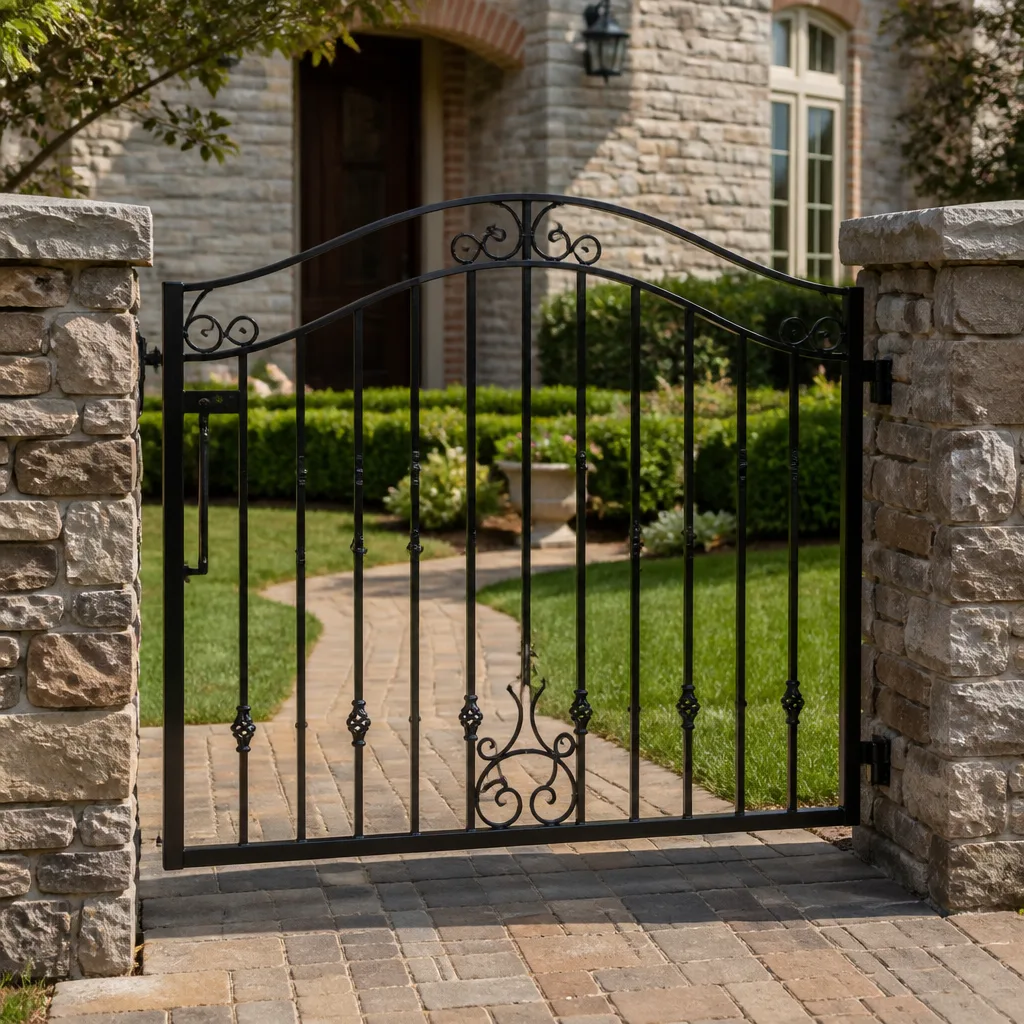
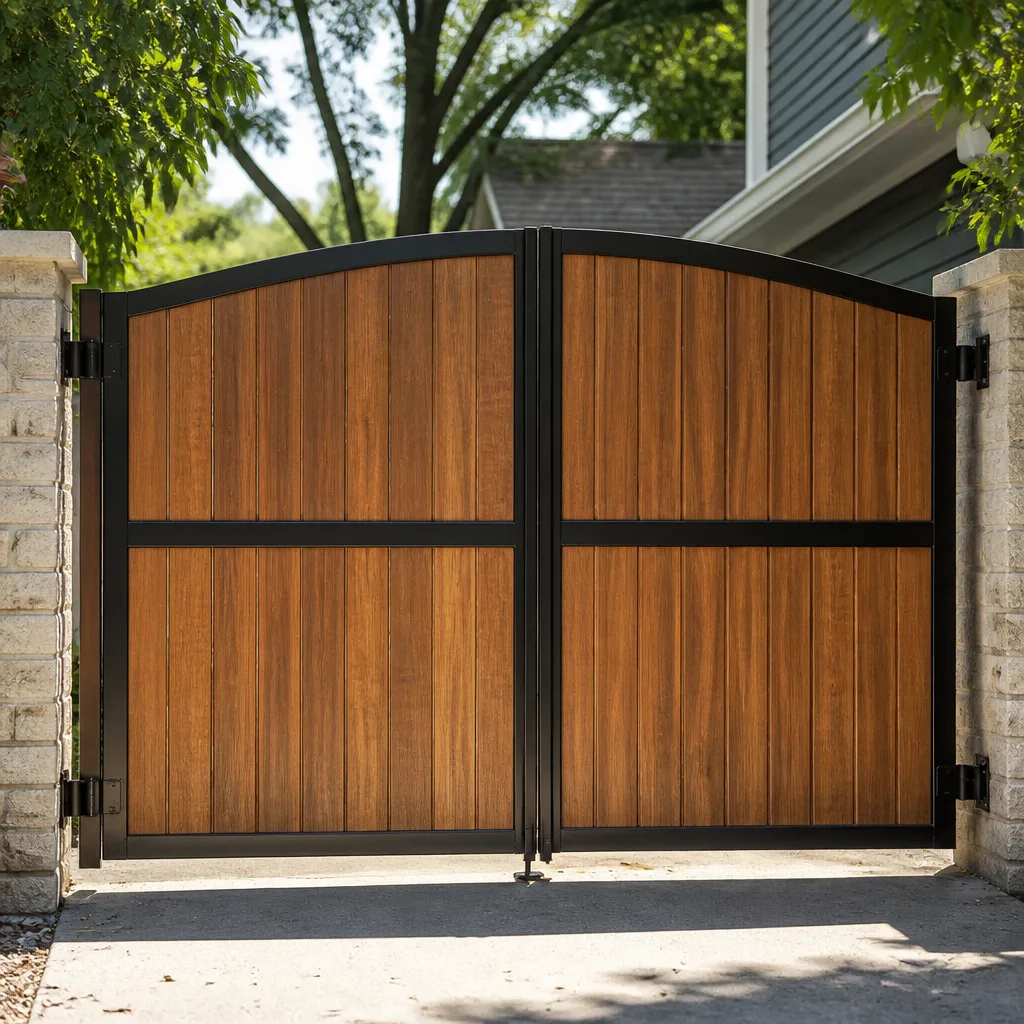
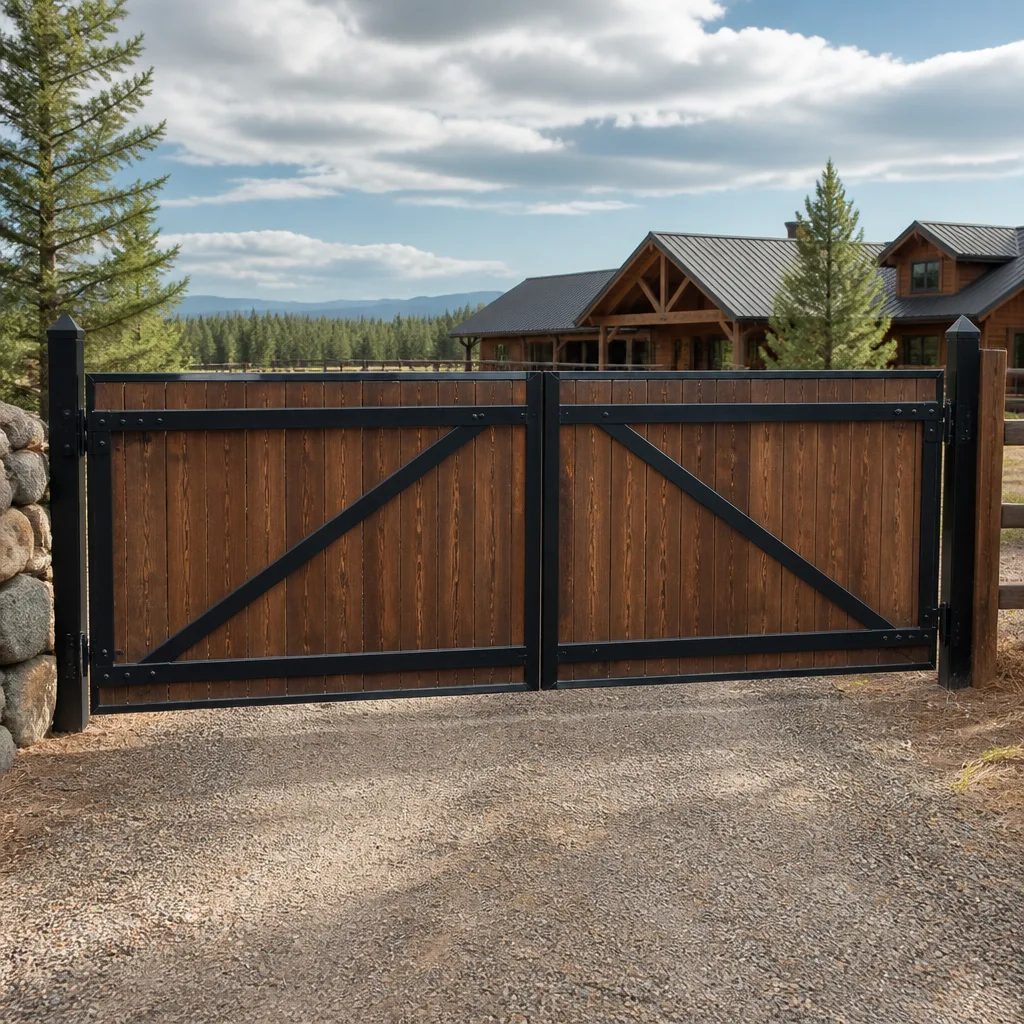
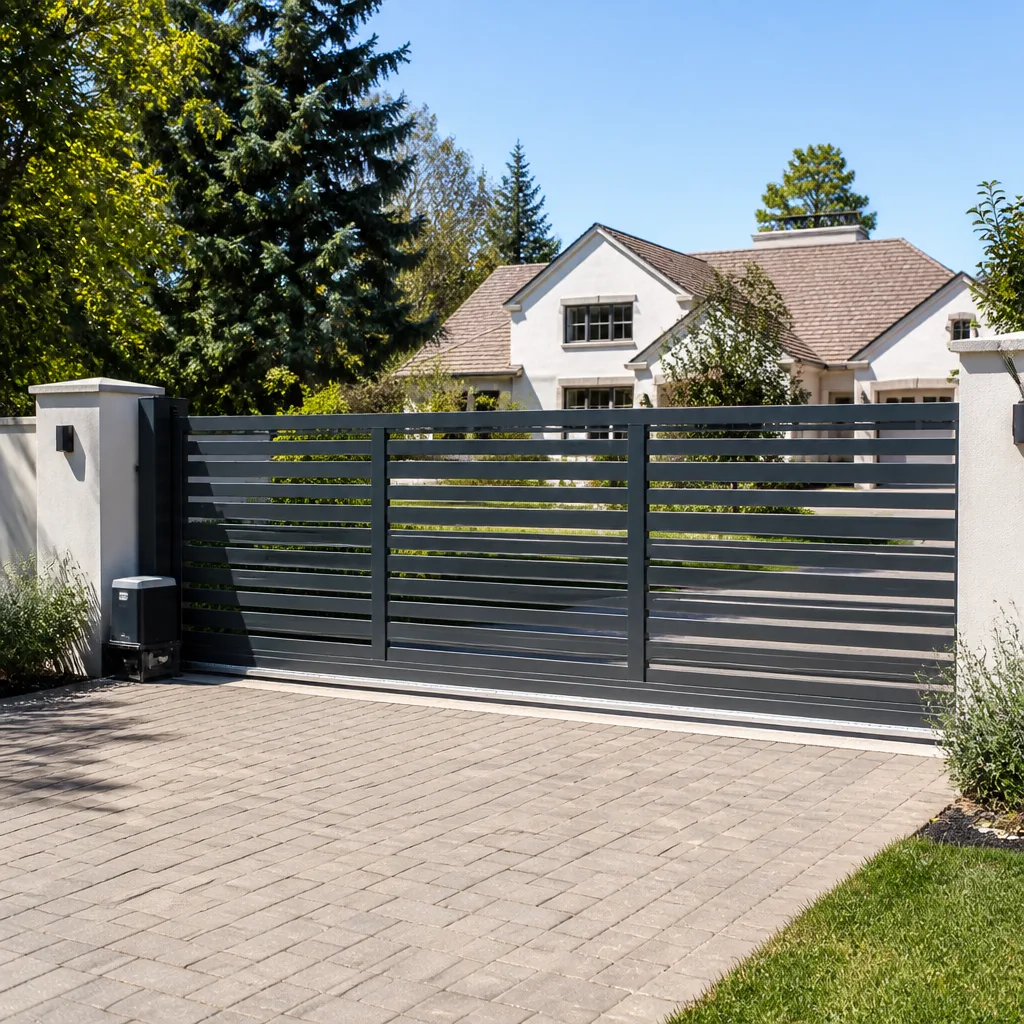
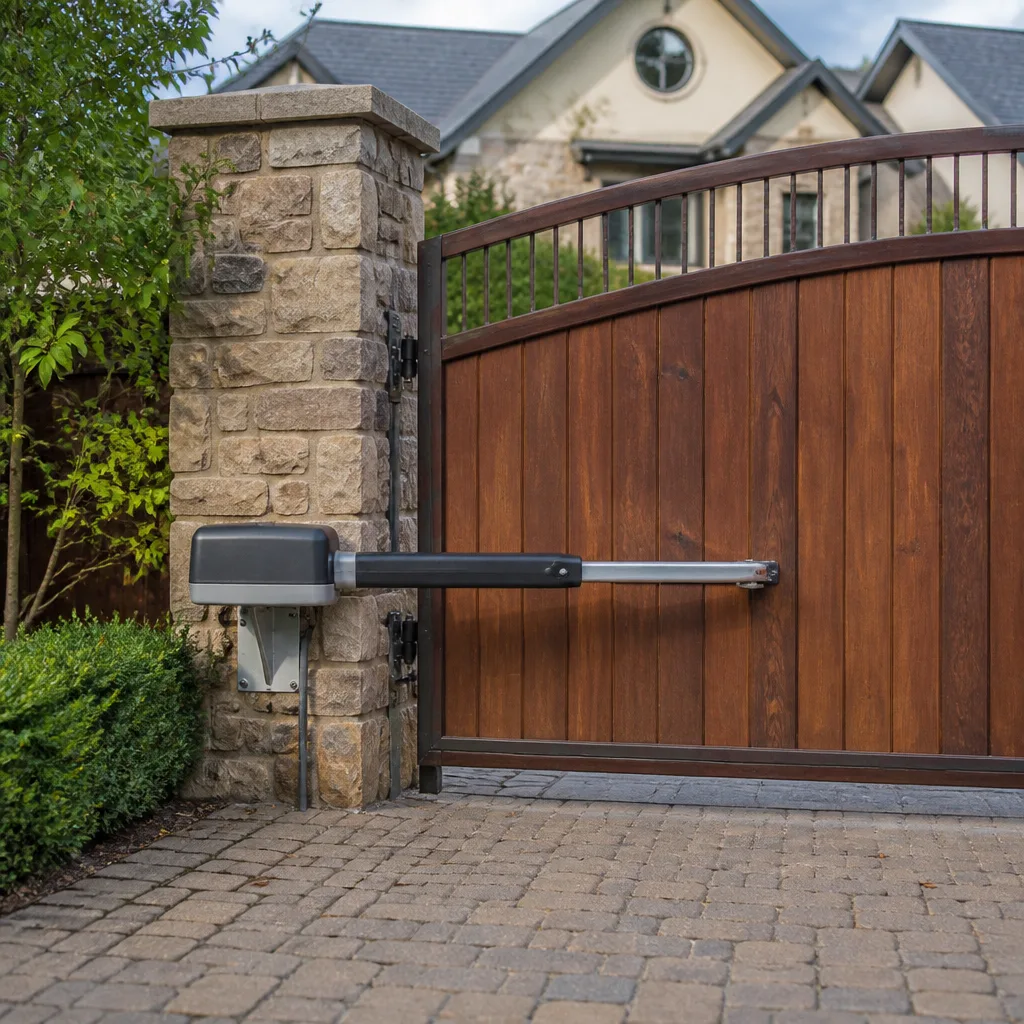
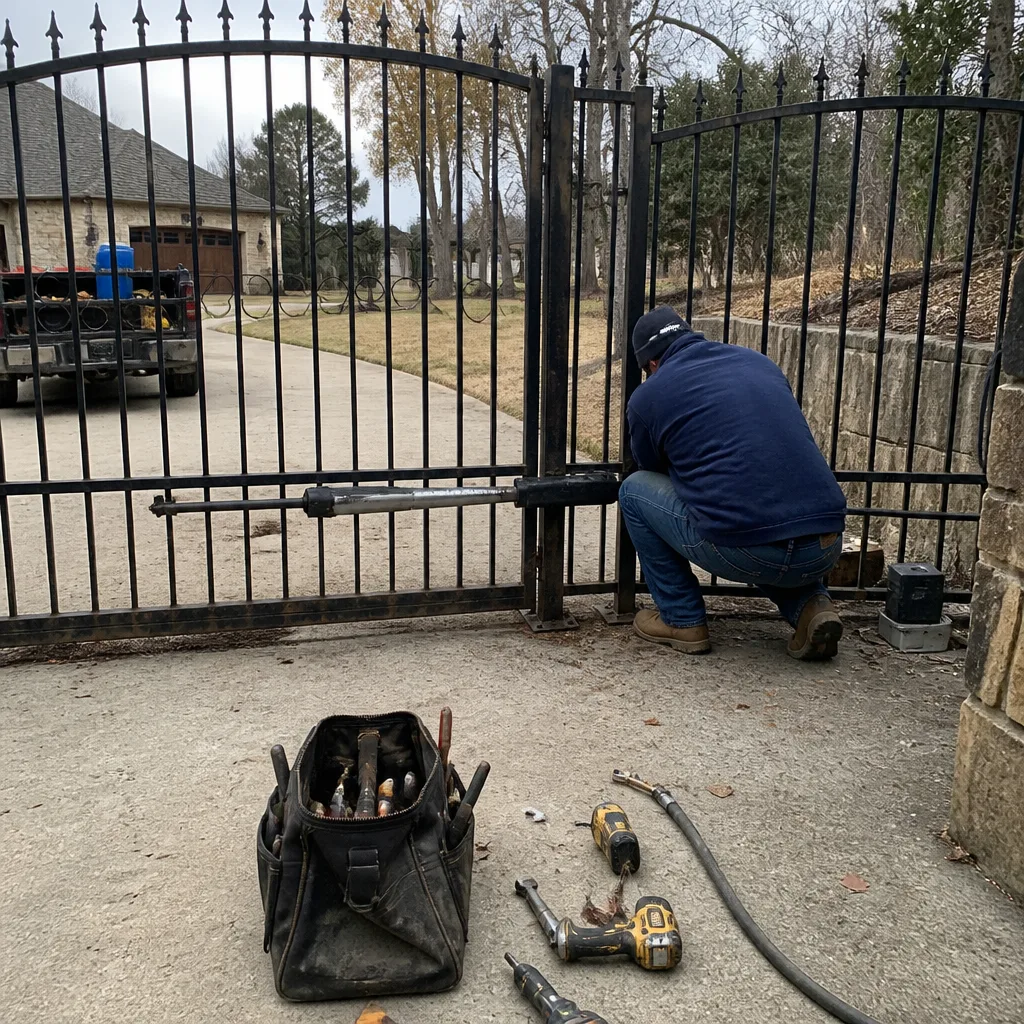 Before
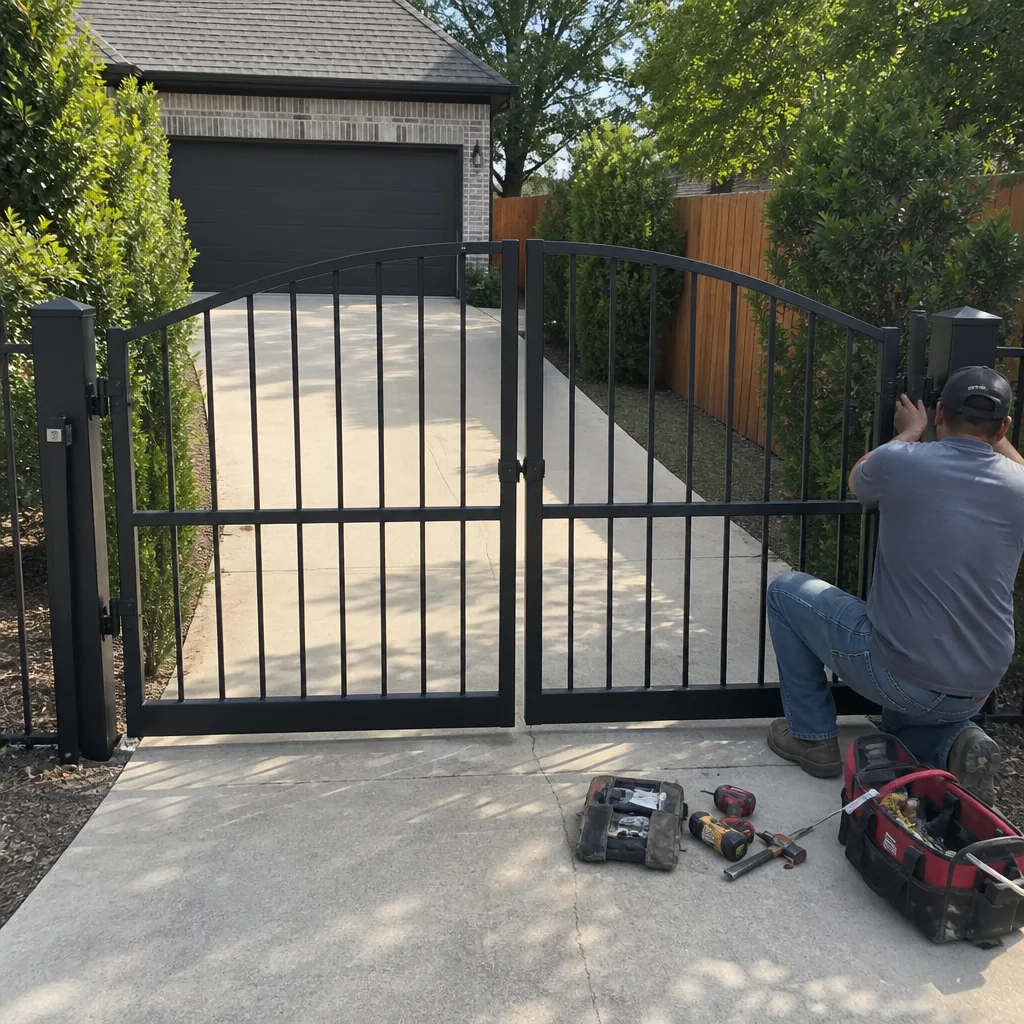 After
After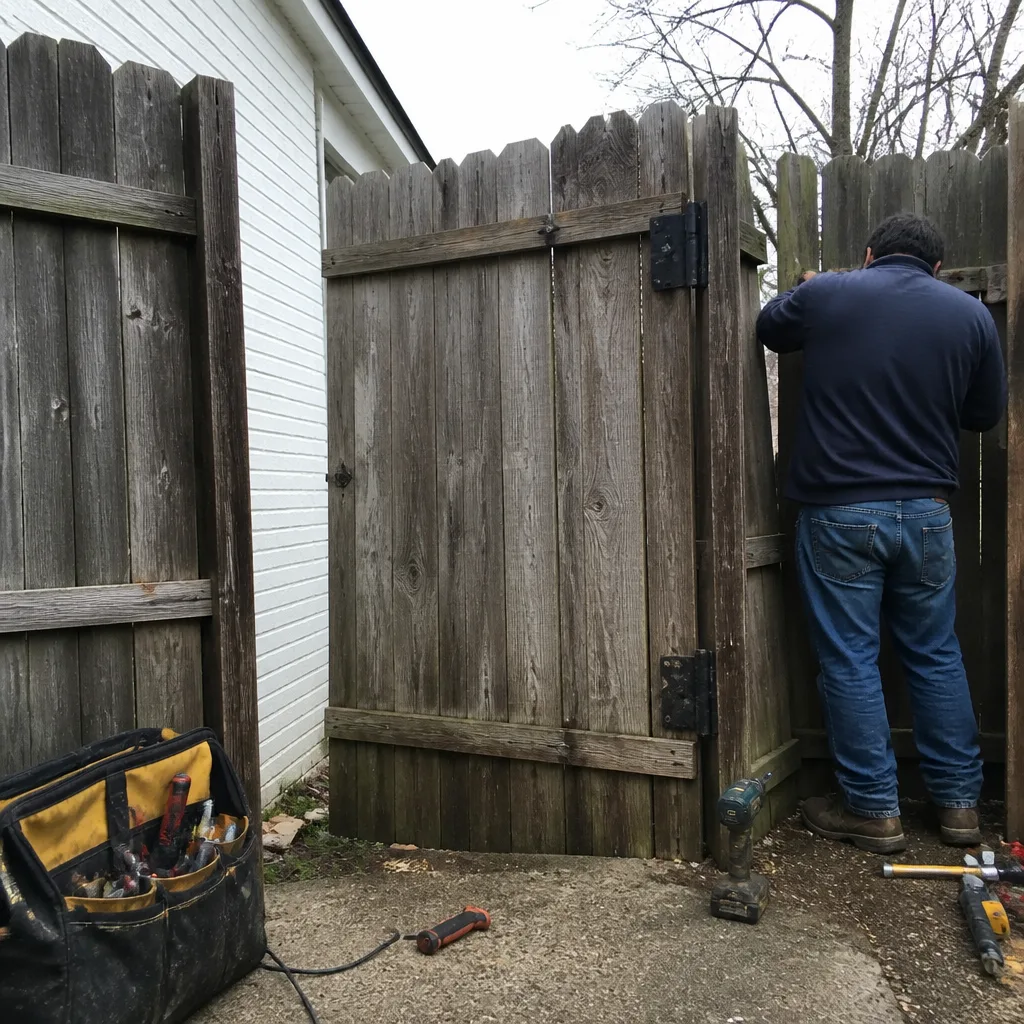 Before
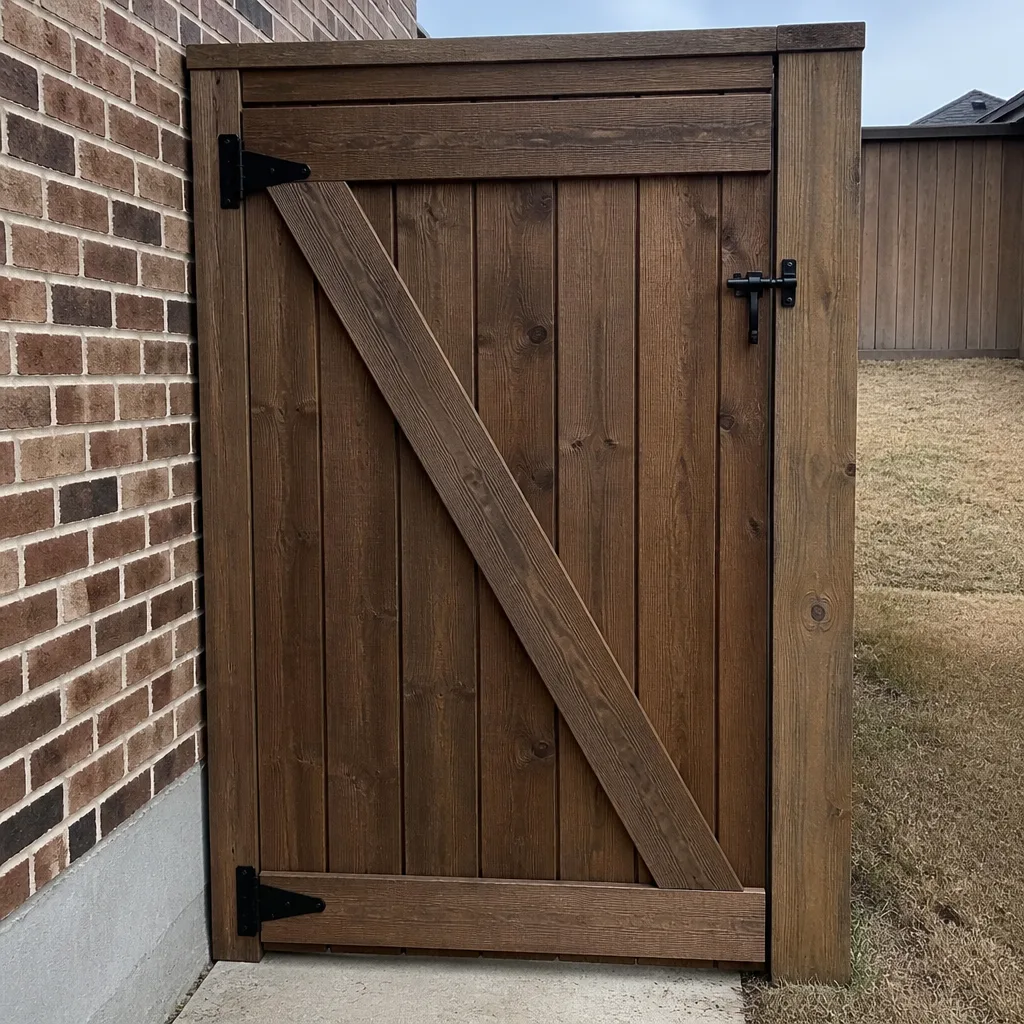 After
After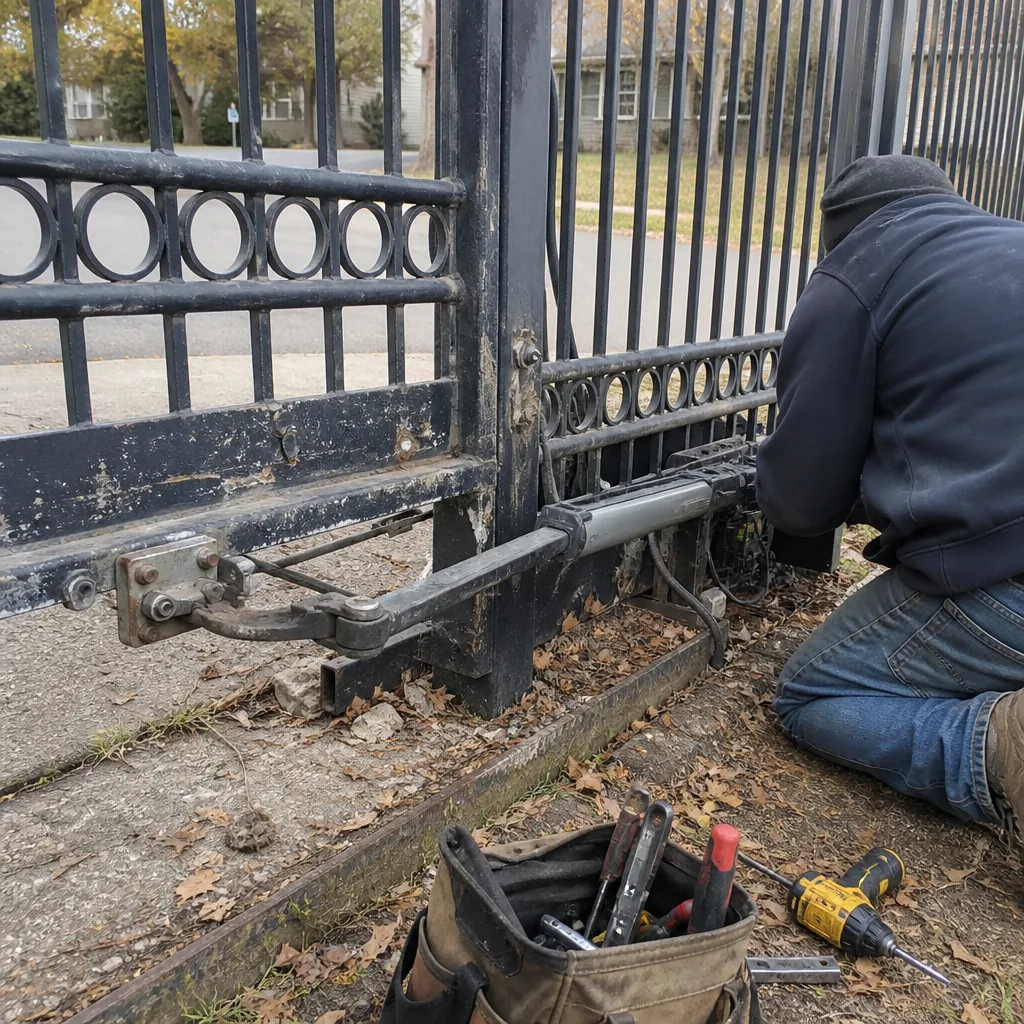 Before
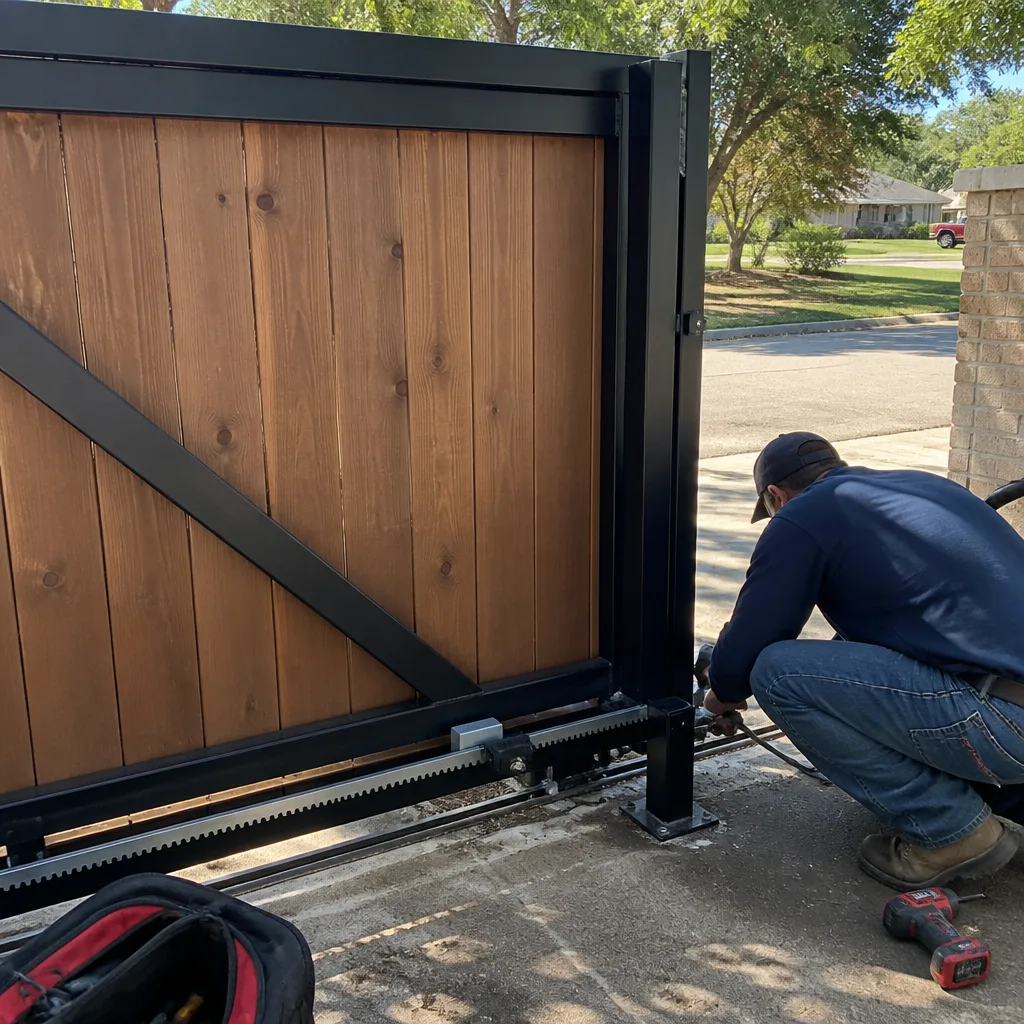 After
AfterGate Repair Warning Signs: A Little Elm Homeowner’s Reference Guide
A gate that groans today will fail tomorrow, usually at 7:15 on a Monday morning when you are already late. Most automatic gate failures do not happen suddenly. They announce themselves weeks in advance through sounds, hesitations, and small movements that are easy to ignore when you are backing out of the driveway. This guide walks through the warning signs we see most often in Little Elm, what they mean, what they cost to fix when caught early, and what they cost when they are not. Read it once, and you will know more about your gate than most homeowners ever learn.
Quick Answer
The most common warning signs of a failing gate are a grinding or squealing opener, a gate that shudders or catches midway, sagging at the latch end, and remotes that work only when you are standing right next to the opener. These almost always indicate worn hinges, a loose chain, failing capacitors, or dead remote batteries. Caught early, most of these repairs cost between $150 and $400. Left alone, they become $1,800 motor replacements and sagging steel that no longer lines up with its own latch.
Table of Contents
- The Sound of Trouble: What Your Gate Is Trying to Tell You
- Movement Problems: Jerks, Shudders, and the Half-Open Gate
- The Sagging Gate: Why Metal Tires Out
- Remote and Keypad Failures: Electrical Signs You Should Not Ignore
- Safety Edge and Sensor Malfunctions: The Ones That Matter Most
- Little Elm Climate and Gate Wear: What the Weather Does to Steel
- What Gate Repairs Cost in Little Elm
- Common Mistakes to Avoid
- When to Call a Professional
- Frequently Asked Questions
- The Bottom Line
The Sound of Trouble: What Your Gate Is Trying to Tell You
A healthy gate makes a low, steady hum. The motor does its work, the chain or arm moves the gate, and the whole thing sounds about as exciting as a refrigerator running. When that hum changes, the gate is telling you something. A high-pitched squeal usually means a bearing inside the opener is dry and wearing out. A grinding noise often means the chain has stretched and is dragging across the sprocket teeth. A clicking sound right at the opener, with no gate movement, points to a failing capacitor or a limit switch that has slipped out of position.
We have replaced openers in Little Elm that made noise for six months before they died. The homeowners assumed the gate was just old and noisy. It was old, but it was not just noisy. It was a motor running without lubrication on a chain that had stretched a full inch past its service life. The $40 chain replacement and $30 service call in month one became a $1,600 opener replacement in month seven.
Here is what to listen for:
- Squealing while moving: dry bearings or a dry chain. Fixable early.
- Grinding or rattling: loose chain, loose mounting bolts, or debris in the track.
- Clicking with no movement: capacitor failure, limit switch issue, or a locked gearbox.
- A loud bang when the gate stops: the gate is slamming into its stops, which means the open or close limit is set wrong.
If your gate sounds different this month than it did last month, that is the warning sign. It will not heal itself.
Movement Problems: Jerks, Shudders, and the Half-Open Gate
A gate should move like a hand sliding across a table. Smooth, even, and predictable. When it starts to hesitate at a certain point, jerk forward, or bind mid-travel, something mechanical is fighting the motor. The motor is usually strong enough to keep pulling, which is why the problem worsens slowly. The motor wins the fight today, but the worn part just keeps wearing, and one day the motor loses.
Common movement problems and their usual causes:
- Gate shudders only at one point: a bent track section, a wheel that is flat-spotted, or a chain with a damaged link.
- Gate stops halfway and reverses: the safety sensor is detecting too much resistance, often from a bad hinge or a wheel that has seized.
- Gate slams into the closed position: the close limit is set too far, and the motor is over-traveling. This bends the gate frame over time.
- Gate opens a few inches and stops: a tripped force sensor, a failing capacitor, or debris jammed in the track.
- Worn hinges: the hinge pins have worn oval, and the gate drops. Replacing the hinges fixes this.
- Settled post: the post footing has shifted, and the post is no longer plumb. The post may need to be reset or reinforced.
- Bent gate frame: the gate itself has twisted from years of pulling and pushing. This usually requires welding and straightening, which is a job for a gate shop that keeps a welder on the truck.
- One remote dead: replace battery, reprogram. If still dead, replace the remote.
- All remotes dead, keypad works: receiver board failure. Replace the board or the opener.
- Keypad dead, remotes work: keypad battery, keypad wiring, or keypad circuit board.
- Everything dead, no power light: check the breaker first, then the opener’s internal fuse or transformer.
- Gate does not reverse when it hits resistance: the safety edge strip is worn, cracked, or disconnected.
- Gate reverses at random for no reason: a photo-eye lens is dirty, misaligned, or a spider web is breaking the beam.
- Gate stopped working after a storm: water got into a safety edge connector or the photo-eye housing.
- The opener beeps continuously or shows a fault light: the safety circuit is open, and the opener is telling you.
- Spring and summer: heat expansion causes gates to bind on tracks that were fine in January. Receiver boards act up in afternoon heat. Welded joints stress as the metal grows.
- Fall: leaves and twigs get into track beds and around wheels. Gate jams rise as the wind picks up.
- Winter: gates that were slightly out of alignment freeze in place. Batteries in remotes and keypads lose voltage faster in the cold, especially if the keypad is mounted on the shady side of the gate.
- Ignoring the noise until the gate stops moving. A noisy gate is a gate begging for a $100 part. Wait long enough, and it becomes a $1,500 part. Noise is the cheapest fix you will ever skip.
- Spraying WD-40 on hinges and chains. WD-40 is a solvent, not a lubricant. It washes out the grease that was there and leaves the metal dry. At our shop we use the correct lithium or silicone lubricant for each part.
- Buying a new remote before testing the old one. Test the remote’s battery and programming first. If every remote failed at once, new remotes will not help; the receiver board is the problem.
- Propping a sagging gate up with a block or a rock. This seems harmless, but it changes the geometry of the opener arm and stresses the hinges. The gate gets worse every time it closes onto a prop.
- Resetting the breaker instead of finding the short. A breaker that trips once is an event. A breaker that trips twice is a circuit trying to tell you something. Resetting it twice without investigating is how small wiring issues become electrical fires.
- Waiting until the safety edge fails completely before calling. If the gate does not reverse on contact, the protection is gone. That is not a maintenance issue, that is a hazard.
- Hiring a general handyman for opener work. Gate automation is its own trade. A handyman who fixes one gate a year cannot diagnose a FAAC receiver board or a Mighty Mule force setting the way a gate specialist can.
In our experience serving Little Elm, movement problems are the ones homeowners put off longest. The gate still opens, so life goes on. The problem is that every jerk and hesitation adds stress to the motor, the hinges, the chain, and the gate frame itself. A $95 hinge repair becomes a $2,400 job when the motor burns out and the gate has twisted itself out of square.
The Sagging Gate: Why Metal Tires Out
A steel gate is heavy. A 14-foot driveway gate can weigh 400 pounds before the opener is even attached. That weight sits on the hinges, and the hinges sit on the post. Over the years, hinges wear, post footings settle, and the latch end of the gate drops, sometimes by an inch or more. You will notice it first because the gate scrapes the ground, or because the latch no longer lines up with the receiver plate.
Sagging is not a cosmetic issue. A sagging gate drags, which makes the motor work harder. It also changes the geometry of the opener arm, so the gate does not close the same way it did. If you have ever pulled a gate closed by hand because the opener would not seat it, you have a sag problem.
The fix depends on where the sag is coming from:
We work on a lot of older gates in the established neighborhoods around Little Elm, and sagging is one of the most common calls. The good news is that most sagging gates can be saved. The gate does not need to be replaced because a hinge wore out in 2026.
Remote and Keypad Failures: Electrical Signs You Should Not Ignore
Remotes fail in two ways: the handsets stop transmitting, or the receiver in the opener stops listening. Figuring out which one failed tells you a lot about what the repair will cost.
If every remote stopped working at once, the problem is usually the receiver board inside the opener, not the remotes themselves. If one remote stopped working but the others still work, replace that remote’s battery first, then reprogram it. If the keypad stopped working but remotes still work, check the keypad wiring and the keypad battery.
There is one pattern worth special attention: remotes that work fine in the morning but fail on hot afternoons. In Texas heat, capacitors and solder joints on receiver boards expand and lose contact. The fix is a new receiver board or a whole new opener, depending on the model. We service nine automation brands including LiftMaster, FAAC, and Elite, and heat-related receiver failure shows up across all of them.
Here is a quick diagnostic ladder:
On a side note, remote and keypad trouble is where we see a lot of money wasted. Homeowners buy new handsets for $60 each when the receiver board is what failed. Or they replace a whole opener when a $30 limit switch was the problem. Getting an accurate diagnosis before buying parts saves more money than any coupon.
Safety Edge and Sensor Malfunctions: The Ones That Matter Most
Every automatic gate is supposed to have a safety system that stops the gate and reverses it when something is in the way. This system comes in two forms: safety edges, which are pressure-sensitive strips on the leading edge of the gate, and photo-eye sensors, which shoot an invisible beam across the gate opening and stop the gate if the beam is broken.
These systems fail quietly. The gate keeps running, but the protection is gone. A gate that closes on a car, a child, or a pet without reversing is not a gate that works fine except for the beeping. It is a gate that has lost its most important function.
Signs of a failing safety system:
Safety edge replacement is a straightforward repair. Testing and re-aligning photo-eyes takes minutes. But diagnosing a failing safety circuit takes experience, because the gate behaves almost normally while the protection is gone. In Little Elm, where gates open onto busy streets and family driveways, we treat any safety system complaint as a same-day priority.
Little Elm Climate and Gate Wear: What the Weather Does to Steel
Little Elm sits on the eastern shore of Lewisville Lake, which means two things for your gate: high humidity and lake-effect weather shifts. Steel expands when the temperature climbs, and humidity keeps the metal from ever fully drying. Add in the occasional north Texas freeze, and you have a climate that tests every hinge, weld, and wire connection on a gate.
Here is what we see season after season:
There is a Little Elm-specific detail worth knowing: homes on the lake side of town deal with more humidity and occasional wind-driven rain. Gated systems out there benefit from more frequent electrical checkups, especially on connectors and low-voltage wiring. A $50 connector replacement prevents a $200 board failure when moisture gets in.
What Gate Repairs Cost in Little Elm
Repair pricing depends on what failed, how hard it is to reach, and whether parts are on the truck or have to be ordered. Here is a realistic range for Little Elm based on jobs we have done in the area. These are the costs when the problem is caught early. The right-hand column is what the same problem costs after months of neglect.
| Problem | Caught Early | After Neglect |
|---|---|---|
| Worn hinge replacement | $95-$180 | $400-$800 (gate twisted, needs welding) |
| Stretched chain adjustment | $60-$120 | $300-$600 (chain and sprocket replacement) |
| Remote receiver board failure | $150-$350 | $1,200-$2,400 (full opener replacement) |
| Safety edge replacement | $120-$250 | $500-$1,200 (edge plus control board damage) |
| Capacitor failure | $80-$150 | $600-$1,500 (motor burnout) |
| Sagging gate hinge and post | $200-$450 | $1,500-$3,500 (new gate and post reset) |
Every job we quote in Little Elm gets the same treatment: a written, upfront price before any work starts. No surprises on the bill. If the work is done and something is not right, the 90-Day Done Right Promise means we come back and make it right, no argument. You can also take $50 off any repair over $250, which is a standing offer we have kept for years because it brings people in early, when repairs are small.
For a clear explanation of how we price gate work overall, see our Ironworks Gate Co. home page, where the full scope of what we do is laid out plainly.
Common Mistakes to Avoid
When to Call a Professional
Call a gate specialist when the gate makes a new noise, when it moves differently than it did last week, when the safety edge stops reversing, or when the opener works intermittently. Also call when you have already replaced the battery and the remote still will not work, or when the gate sags enough that the latch no longer lines up. These are all specific, diagnosable conditions. A qualified gate technician can find them in one visit, most of the time. Ironworks Gate Co. offers free estimates in Little Elm. Call (432) 547-6481, and a live person answers 24 hours a day.
Frequently Asked Questions
Most gate repairs in Little Elm run between $95 and $450 when caught early. That covers hinge replacement, chain adjustment, safety edge replacement, capacitor swaps, and receiver board work. Full opener replacements and gate structural work run $1,200 to $3,500 depending on the gate and the automation. Call (432) 547-6481 for an exact quote before any work begins, and remember we take $50 off any repair over $250.
A grinding noise almost always means the chain has stretched and is dragging, or the opener’s internal bearing has run dry. The fix is usually a chain adjustment or lubrication on the first visit. Left alone, the chain wears the sprocket, and the whole drive assembly has to be replaced.
In most cases, yes. Most repair jobs are completed in a single visit because we carry common parts for LiftMaster, FAAC, Elite, and the other brands we service on the trucks. If a specialty part has to be ordered, we tell you upfront and schedule the return visit before we leave.
We service nine major gate-automation brands: LiftMaster, FAAC, BFT, Linear, Viking, Ghost Controls, DoorKing, Elite, and Mighty Mule. Whatever is on your driveway, the correct fix is made on the first visit.
A seasonal tune-up covers chain or belt tension, hinge lubrication, limit switch check, safety edge and photo-eye testing, remote battery check, and a full operational test of the opener. We offer it for $89 and recommend it every spring in Little Elm, before the heat arrives and the metal expands.
Yes. Every job we complete is covered by our 90-Day Done Right Promise. If something is not right with the work, we come back and make it right, no hassle and no paperwork. That promise is in writing on every job we do in Little Elm.
The Bottom Line
Your gate is the only part of your home that moves every time you leave and every time you come back. It weighs hundreds of pounds, runs on electricity, and sits outside in Little Elm heat, humidity, and the occasional freeze. That is a hard life, and the gate will tell you when something is wrong. The grinding, the shudder, the half-open hesitation, the remote that only works when you are close. Those are warnings, not quirks. Catch them early and the repair is measured in hundreds. Ignore them and it is measured in thousands. A quiet gate, a smooth gate, a gate that reverses when it should, that is what we have been doing for over 42 years. If yours is not doing that, call. We will be there when we say.
Written by Victor Salinas, Owner at Ironworks Gate Co., serving Little Elm since 2013.