
Last updated August 25, 2026
Free on-site gate assessment - hinges, posts, and your LiftMaster or Nice gate operator checked before anything is quoted
The assessment is free and the quote is the invoice.
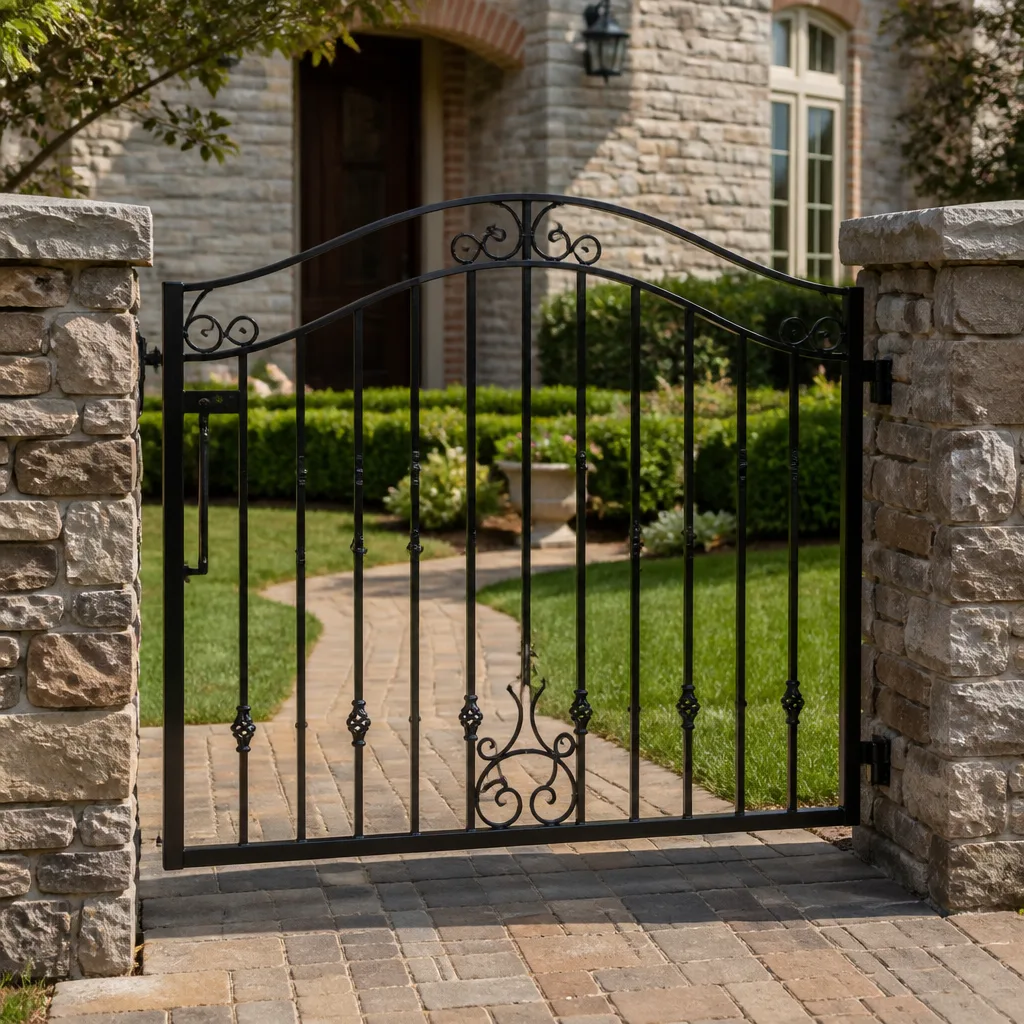
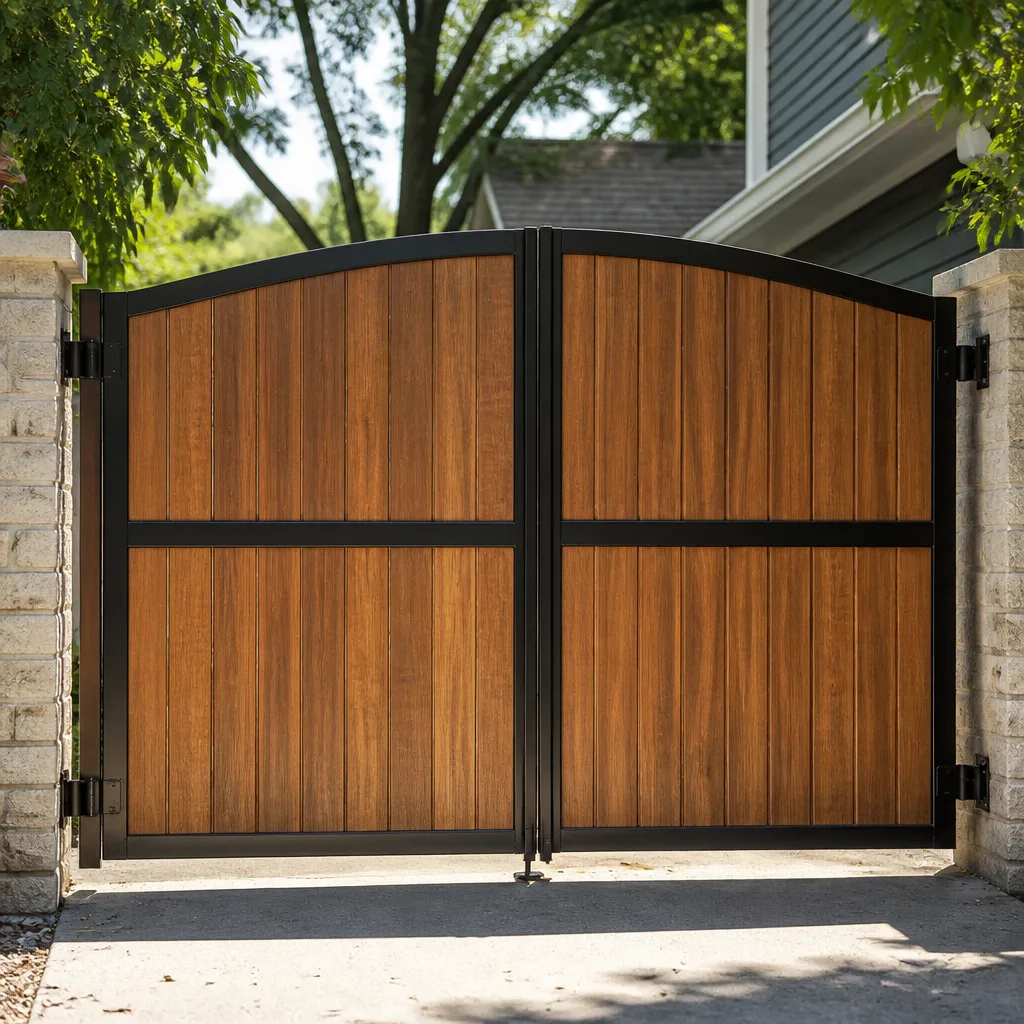
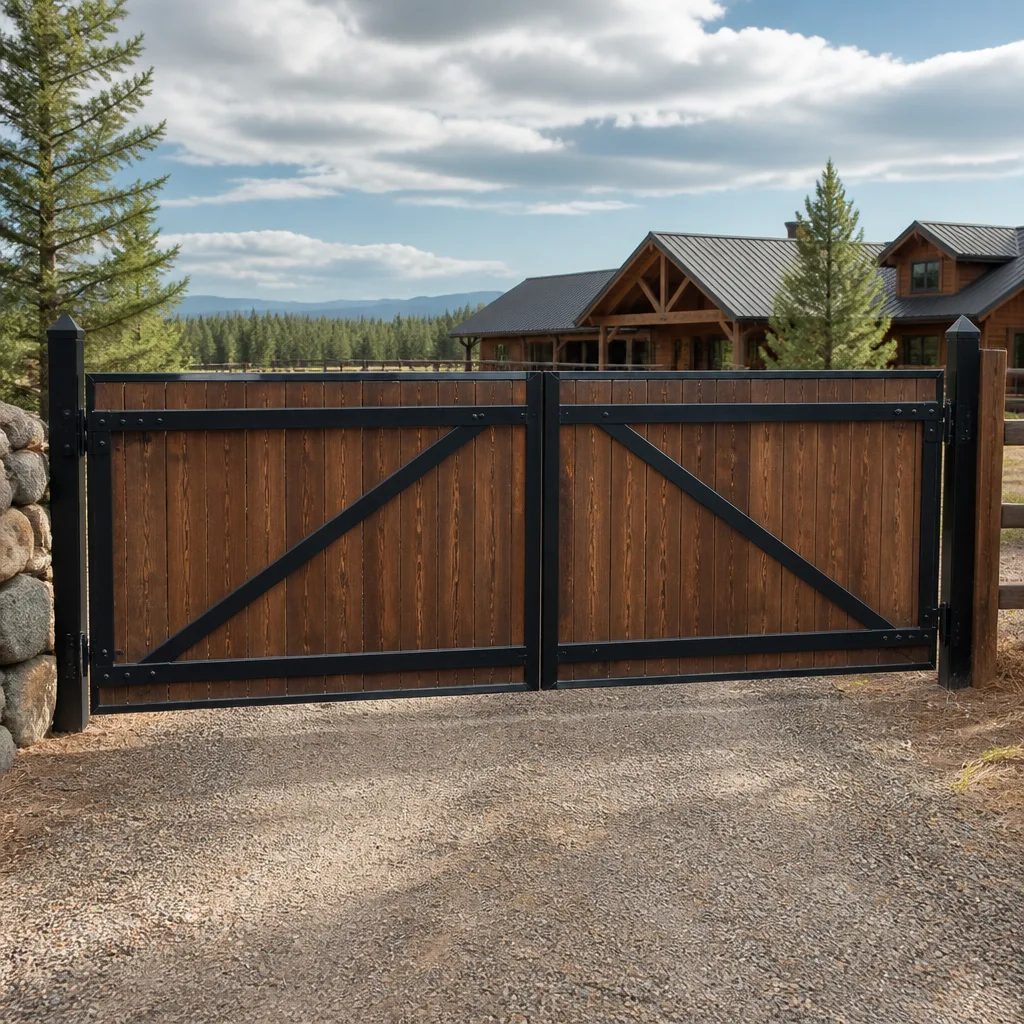
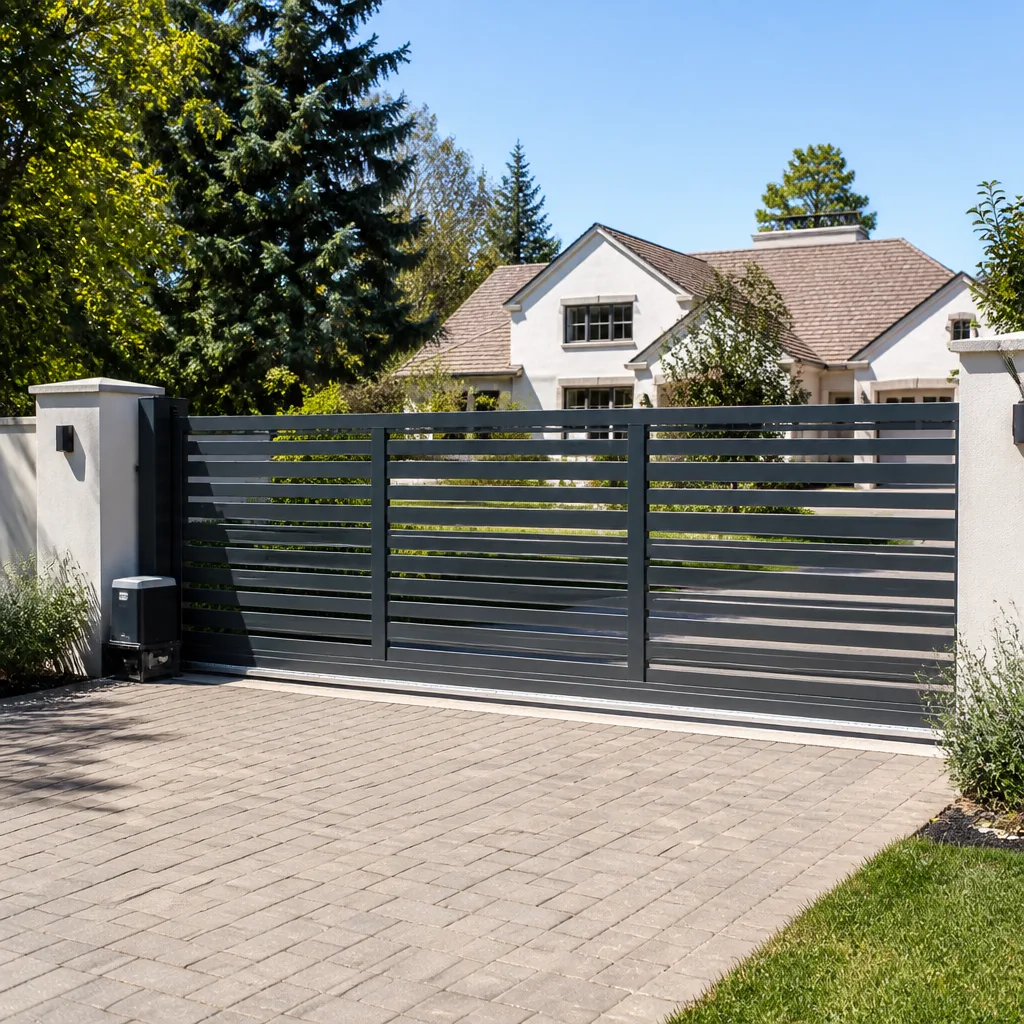
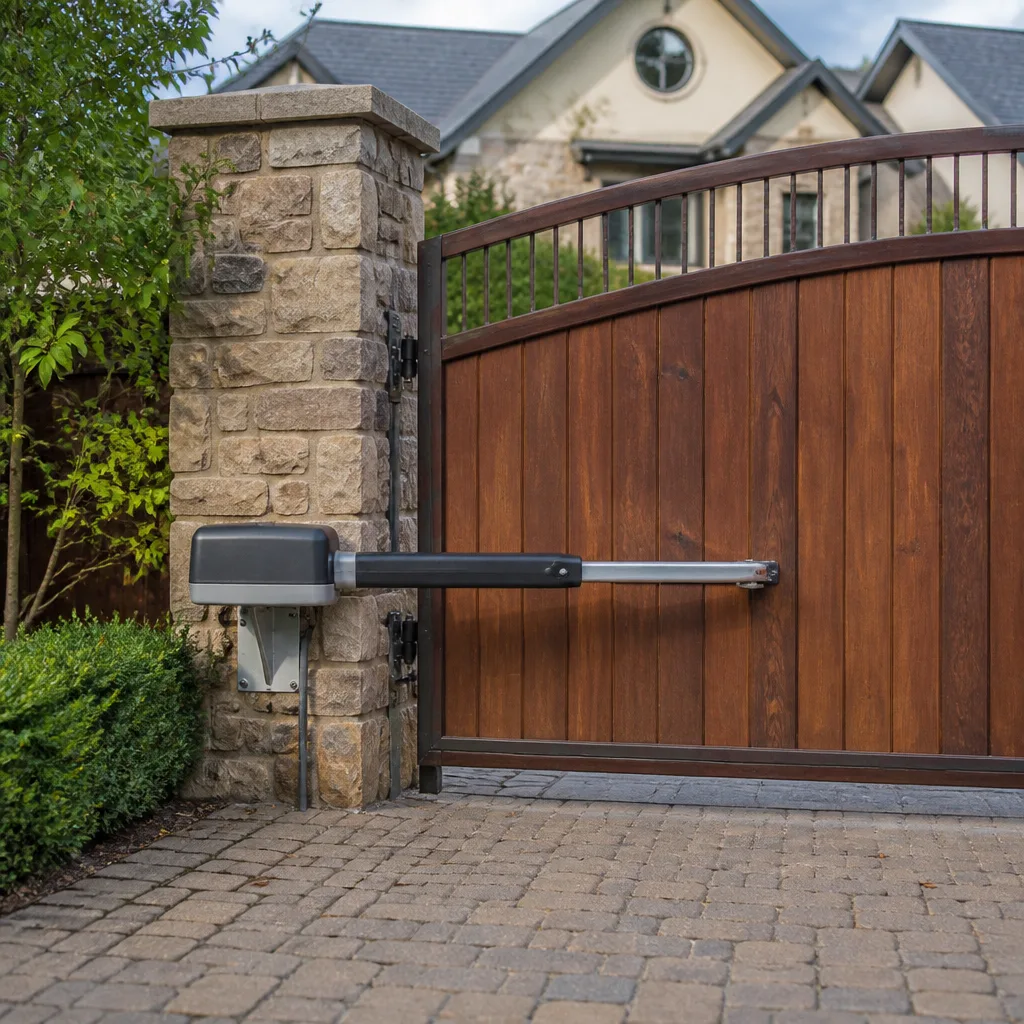
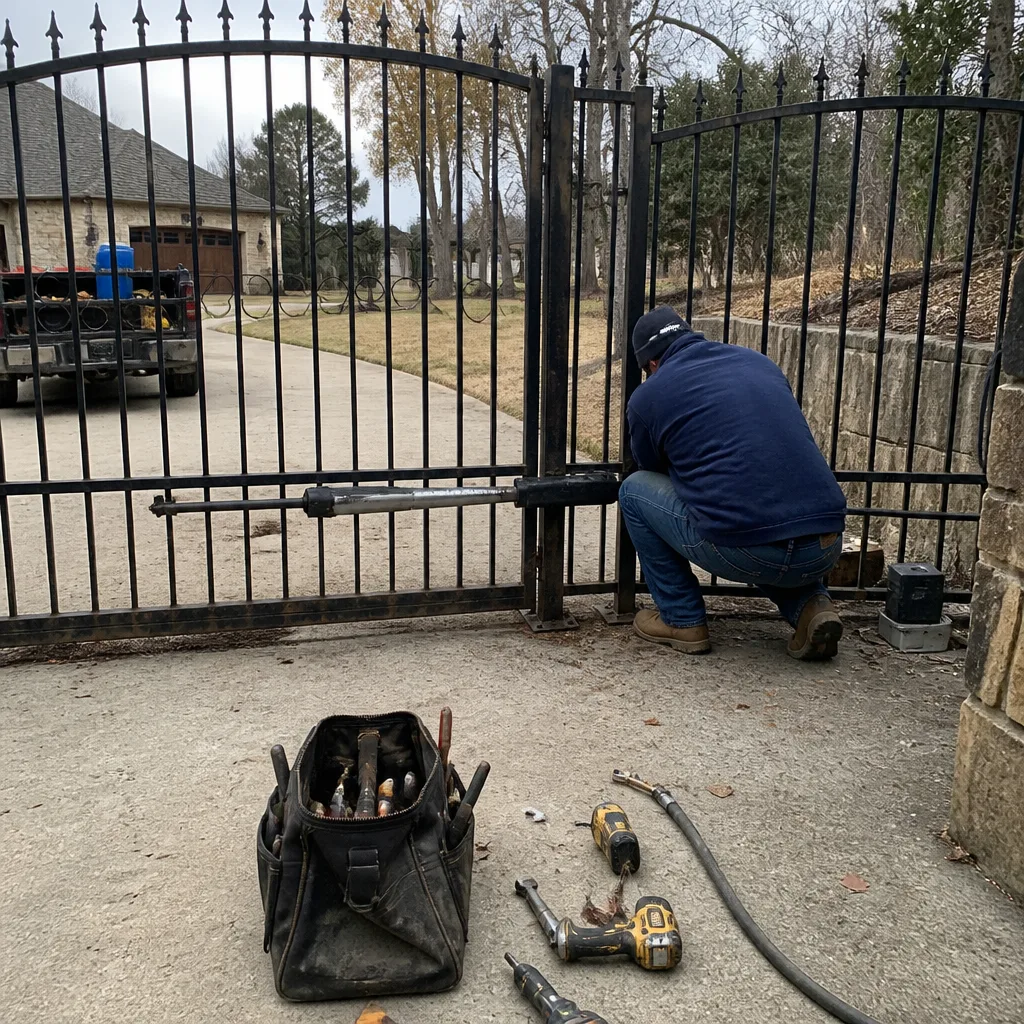 Before
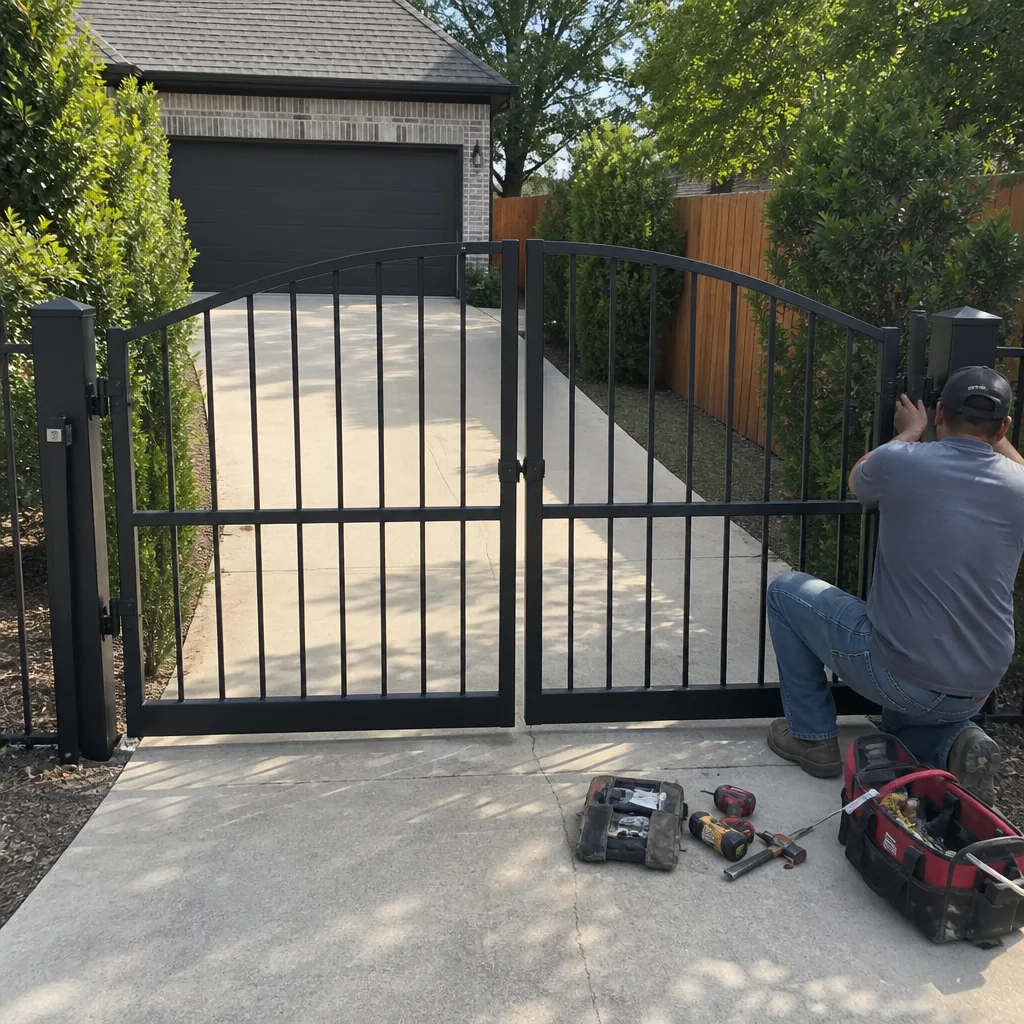 After
After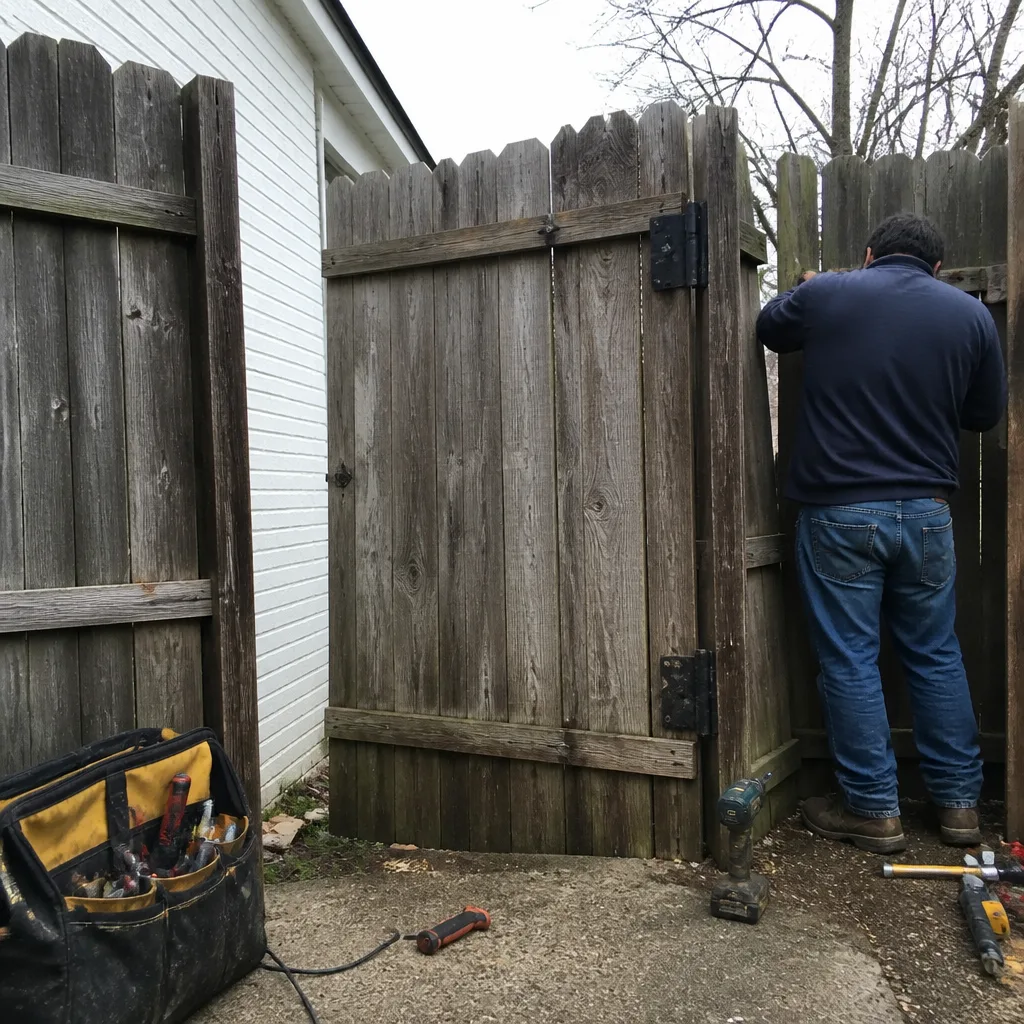 Before
 After
After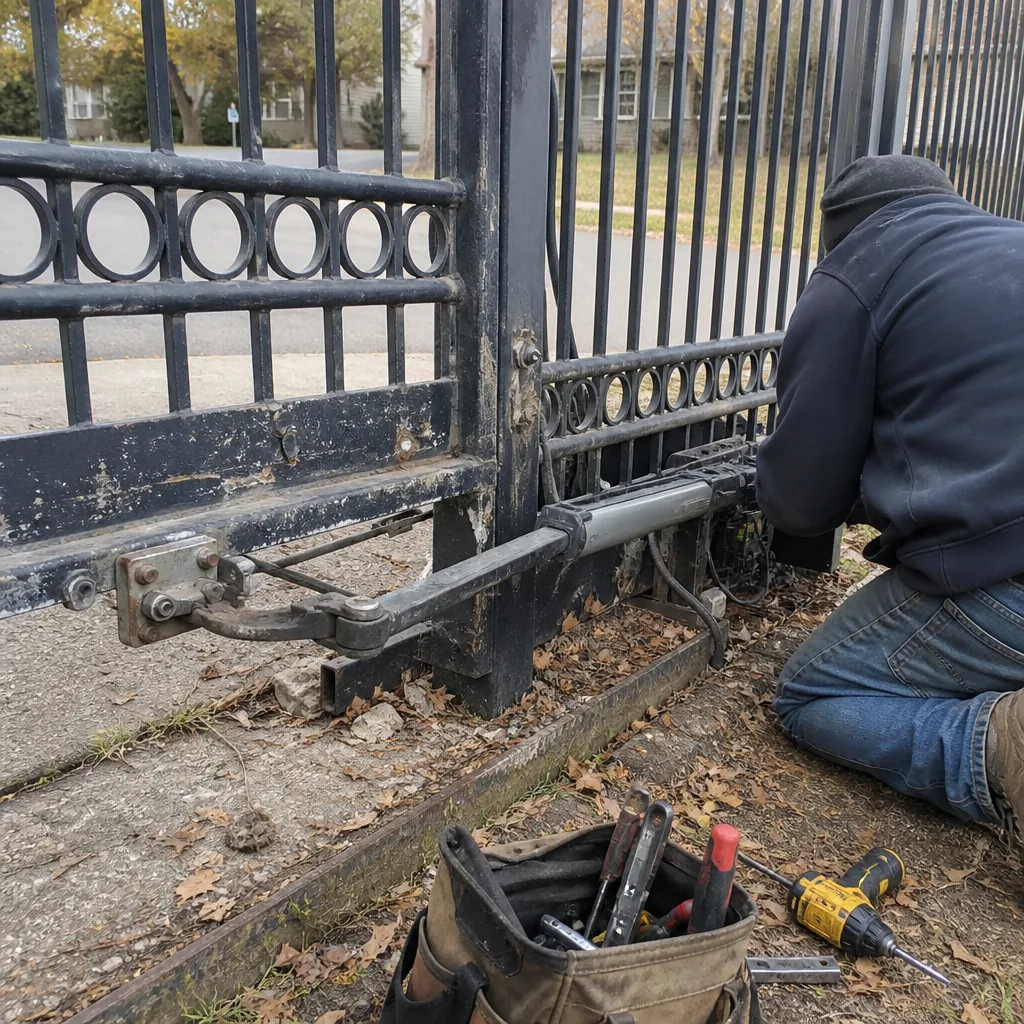 Before
 After
AfterGate Repair Permits, Codes & Inspections in TX: What You Need to Know
Most Texas homeowners assume a broken gate is a simple fix: replace the hinge, swap the opener arm, call it done. What they don’t realize is that in many cities across the state, including Little Elm, the moment you alter an automated gate’s motor, relocate a post, or change the swing direction, you may have stepped into permit territory without knowing it. This guide walks through exactly where Texas draws the line between routine repair and regulated work, what inspectors actually check, and how to avoid the expensive call-back that comes from doing it wrong the first time.
Quick Answer
Routine gate repairs like replacing hinges, welding a cracked post, or swapping a failed circuit board typically require no permit in Texas. However, any new gate installation, relocation of gate posts, work involving an easement or public right-of-way, or significant changes to automatic opener entrapment protection can trigger a permit, an inspection, or both. In Little Elm, most residential gate repairs fall under the city’s minor maintenance exemption, but the safest path is a five-minute call to the Building Inspections Department before cutting concrete.
Table of Contents
- When a Gate Repair Needs a Permit in Texas
- Repairs That Typically Require No Permit
- UL 325 and Texas Gate Safety Codes: What Homeowners Must Understand
- Little Elm Permit & Inspection Rules, Explained
- How Texas Soil, Heat, and Wind Affect Gate Code Compliance
- What an Inspector Actually Checks on a Gate
- HOA Rules and Municipal Codes: Two Separate Hurdles
- Step-by-Step: Handling a Gate Repair That Needs a Permit
When a Gate Repair Needs a Permit in Texas
Texas is a patchwork of municipal code requirements. There is no single statewide gate permit law. Each city adopts its own building code, usually modeled on the International Residential Code (IRC) or International Building Code (IBC) with local amendments. Denton County, where Little Elm sits, leaves permit authority to the municipalities. Little Elm operates under its own adopted codes and amendments.
In general, a permit is triggered when work is structural, when it involves new construction rather than repair, when it extends into a setback, easement, or right-of-way, or when it modifies electrical components in a way that code treats as new work. Here is a plain-English breakdown:
- New gate installation: almost always requires a permit in Little Elm if posts are being set in concrete or if an opener will be wired to the home’s electrical system.
- Moving an existing gate: changing the gate’s location, widening the opening, or relocating posts is treated as new construction, not repair.
- Adding automation to a manual gate: installing a motor, adding electrical to a previously manual gate, or converting from solar to line voltage requires a permit in most Texas cities, including Little Elm.
- Replacing the gate in full: a rotted wooden gate replaced with an iron gate of the same width and same posts may be exempt in many cities, but any structural change pulls it back under permit requirements.
- Work in a public utility easement: any gate installed across or adjacent to an easement may require review. In neighborhoods like Frisco Hills or Paloma Creek near Little Elm, utility easements run along many rear and side property lines.
The test we suggest to our own customers is simple: if the work changes the gate’s footprint, its automation, or its structural frame, treat it as permit-eligible. If it is a direct replacement of a broken part, it almost certainly is not.
Repairs That Typically Require No Permit
Most of what homeowners in Little Elm call us for falls squarely under routine repair. The city’s minor maintenance exemption is designed for exactly this: replacing a broken component with a like-for-like part, with no change in structure, electrical demand, or gate geometry.
Common no-permit repairs include:
- Hinge replacement: swapping a worn ball-bearing hinge or weld-on barrel hinge for the same size and type.
- Welding repair: re-welding a cracked frame member or reattaching a broken weld bead on an existing iron gate. This is repair, not new fabrication.
- Opener circuit board replacement: replacing a failed control board on a LiftMaster or Mighty Mule opener with the same model board is component repair, not new electrical work.
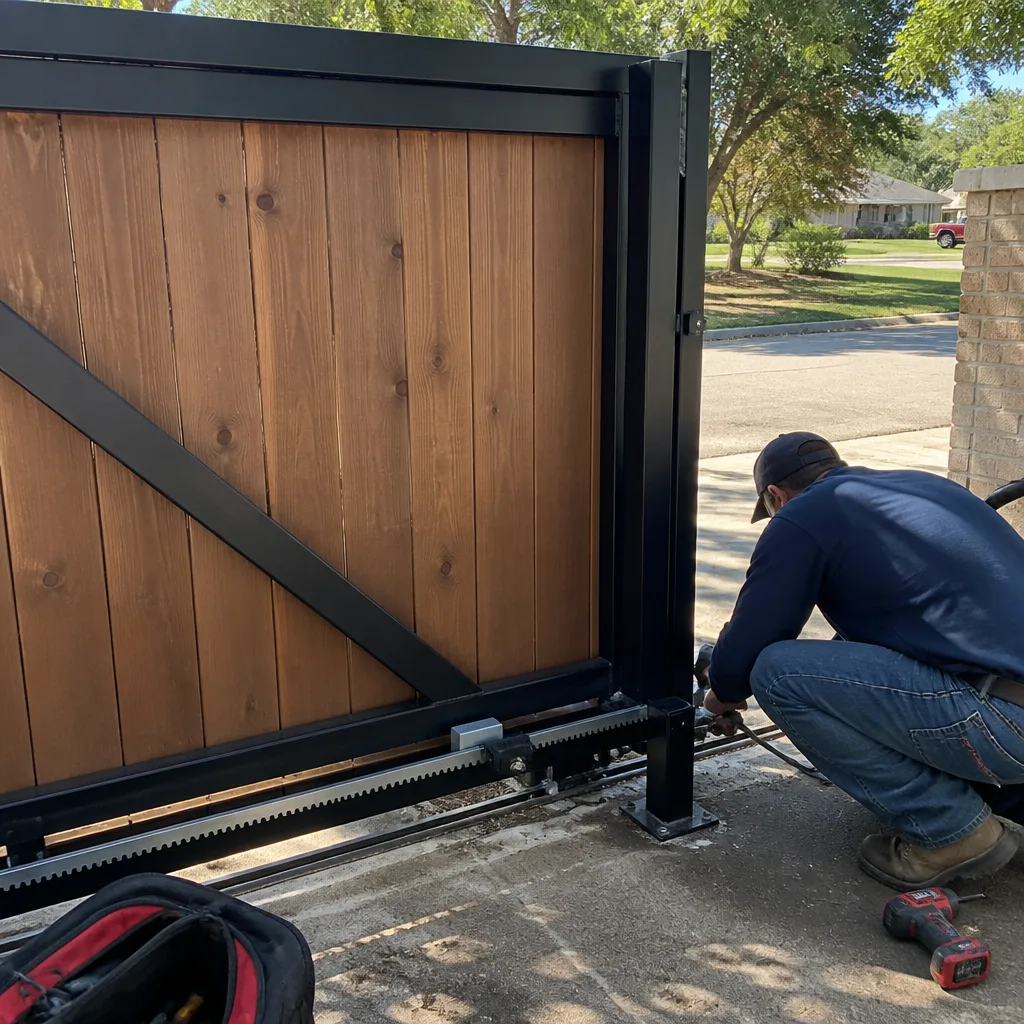
- Wheel replacement: swapping a worn V-track wheel or guide wheel on a slide gate.
- Chain or belt replacement: replacing a stretched or broken drive chain on a slide gate operator.
- Keypad or receiver replacement: installing a new keypad or radio receiver to the existing opener wiring.
- Sensor realignment: adjusting or replacing a photo eye or safety edge sensor to restore proper entrapment protection.
A good rule: if the work is unbolting something broken and bolting on an identical replacement, Texas cities generally don’t want a permit for it. The moment you change the design, relocate something, pour new concrete, or pull new wire through conduit, the calculus changes.
UL 325 and Texas Gate Safety Codes: What Homeowners Must Understand
UL 325 is the national safety standard for automated gate operators. It exists for one reason: to prevent a moving gate from crushing or entrapping a person. Since 2001, every automated gate opener sold and installed in the United States must meet UL 325 standards for entrapment protection.
Here is what UL 325 requires, in plain language:
- Two independent entrapment protection devices for any automatic gate opener installed in a residential setting. This typically means a photo eye or safety edge, plus an inherent reversing mechanism built into the opener.
- A physical stop or reversing mechanism that prevents the gate from closing with dangerous force on an obstruction.
- Warning signage with specific wording, placed on both sides of the gate where visible.
- Manual release accessible from outside the gate, so the gate can be opened by hand during a power failure.
Texas has no separate state-level gate safety statute. Cities adopt code provisions that reference UL 325, usually through the IRC or through electrical code chapters. Little Elm’s adopted codes include these references. In practical terms, if a gate opener is installed in Little Elm without working entrapment protection, the installer created a code violation that an inspector can flag, and that a future home sale inspection may catch.
We work on nine automation brands, including LiftMaster, FAAC, and Elite, and the UL 325 compliance conversation is the same regardless of manufacturer. The opener must reverse on contact or obstruction. The safety edge or photo eye must function. The warning signs must be present. If any of those three are missing, the gate is not code-compliant, even if the motor runs perfectly.
Little Elm Permit & Inspection Rules, Explained
Little Elm sits on the north shore of Lewisville Lake, east of Denton and west of Frisco. The town has grown quickly, and its building codes have tightened along with that growth. The city’s Building Inspections Department enforces the adopted building codes, including electrical and structural chapters that apply to driveway gates.
For gate work in Little Elm, the relevant thresholds are:
- New gate or fence structure over 7 feet in height in a required side yard: engineering or at least a structural review may be requested.
- Electrical work requiring a new circuit: installing a new opener with a dedicated circuit from the home’s panel requires an electrical permit. Replacing an opener on an existing circuit does not.
- Gate across a floodplain zone: parts of Little Elm border Lake Lewisville. Work in a FEMA floodplain may require additional review before posts go in.
- Corner lot visibility: Little Elm, like many Texas cities, has sight-triangle rules. A tall solid gate on a corner lot in a neighborhood like Paloma Creek or Eldorado Estates may need to comply with visibility requirements at the driveway approach.
The city’s permit office is accessible and responsive. A typical homeowner call to ask “do I need a permit for this gate fix?” takes five minutes, and the staff will tell you directly. We always encourage the call, because the cost of an unpermitted gate that later gets flagged during a home sale is far higher than the cost of the phone call.
How Texas Soil, Heat, and Wind Affect Gate Code Compliance
North Texas has expansive clay soil. Little Elm is no exception. The soil under a gate post swells when wet and shrinks when dry, and over twenty years that movement works a post loose even if the original install was solid. A gate that was perfectly plumb in 2005 can be leaning three inches by 2025, and that lean affects more than looks: it changes the gate’s closing force, strains hinges, and can defeat the UL 325 reversing mechanism.
Wind is the other factor. Little Elm sits on open lake-adjacent terrain, and a solid-panel iron gate catches north wind like a sail. A gate that is code-compliant in calm weather may fail an inspection or, worse, fail in operation during a spring storm front. Proper post depth for clay soil in North Texas is 36 to 42 inches, with concrete footings sized to resist lateral wind load. Gate frames must be braced or reinforced on wide openings. These are not optional details; they are the difference between a gate that works for fifteen years and one that drags on the track after two.
Heat matters too. Summer surface temperatures in Little Elm regularly exceed 130 degrees on a dark iron gate. Control boards and capacitor-based openers fail faster when they bake inside an unvented steel housing. We regularly see opener failures in July and August that trace back to heat-soaked electronics, and the fix is often a better-vented housing plus a board replacement, not just the board alone.
What an Inspector Actually Checks on a Gate
If your gate repair or new installation in Little Elm does require an inspection, the visit is usually short and focused. Here is what the inspector is looking for, in order:
- Entrapment protection: does the gate reverse when it hits an obstruction? Does the photo eye or safety edge trigger before the gate applies full closing force?
- Electrical grounding and bonding: is the opener properly grounded? Is the conduit and wiring method correct for outdoor use?
- Post depth and footing: were the posts set to the depth shown on any required plan? Is the concrete sufficient for the gate’s weight and wind exposure?
- Warning signs: are the UL 325 warning signs present and legible on both sides?
- Safe clearance: does the gate, in any position, have the minimum required clearance from fixed objects or create a crush point against a wall or fence?
- Grade and drainage: does the gate track or swing path clear the finished grade without creating a trip hazard or water pooling?
Most failing gates fail the first two items. The gate closes with too much force, or the photo eye is misaligned and sends a false obstruction signal that homeowners solve by bypassing the safety circuit. Do not bypass the safety circuit. It creates a condition that can injure a child or pet and will fail any inspection.
HOA Rules and Municipal Codes: Two Separate Hurdles
In a master-planned community, the HOA gate rules are often stricter than city code. Little Elm has a high concentration of HOA-governed neighborhoods: Frisco Hills, Paloma Creek, Valencia on the Lake, and others each have architectural control language that governs gate style, color, height, and even whether a gate is permitted at all.
The important distinction: HOA approval and city permit are two separate processes. Getting one does not satisfy the other. We have worked on gates where a homeowner had full HOA approval but no city permit, and vice versa. Both need to be handled before work starts.
Common HOA gate restrictions we see across Denton County:
- Design review required for any gate visible from the street, even a repair that changes gate color or panel style.
- Height limits often lower than city code allows; an 8-foot gate may be legal in Little Elm but prohibited by the HOA’s 6-foot maximum.
- Material restrictions: some HOAs mandate wood or ornamental iron and prohibit solid steel panels.
- Automation restrictions: certain HOAs limit opener types or require that slide gates be used instead of swing gates on corner lots.
- Timer and access requirements for gates on alleys or shared access drives.
If you live in an HOA, pull your community’s design guidelines before you even call a gate company. It saves everyone a second trip.
Step-by-Step: Handling a Gate Repair That Needs a Permit
If your gate repair crosses into permit territory in Little Elm, here is the sequence we recommend, based on how we have handled hundreds of these jobs across Denton County:
- Identify the scope. Write down exactly what will change: new posts, new opener, new electrical circuit, relocated gate, new concrete. If the list only contains like-for-like replacements, you likely have no permit obligation.
- Call the Little Elm Building Inspections Department. Describe the work. Ask directly: “Does this require a permit?” Follow up with an email if they want photos. Documentation of the city’s answer protects you later.
- Check HOA rules. If you are in an HOA, submit the design review request at the same time. Do not wait for one approval before starting the other.
- Get a written scope and price from a licensed gate contractor. The scope should list permit handling as a line item if one is required. At Ironworks Gate Co., the price is agreed before a single bolt is turned, and the permit is pulled before work begins.
- Complete the work. The contractor handles the inspection scheduling once the city issues the permit. The work should be done to code the first time, so the inspection is a confirmation, not a correction event.
- Keep records. File the permit, inspection sign-off, and any HOA approval letter with your home records. When you sell, these documents answer questions before they become deal-breakers.
Common Mistakes to Avoid
- Bypassing the safety circuit. When a photo eye trips falsely, some homeowners and handymen disconnect it rather than align it. This is the single most common code violation on Texas automated gates, and it is dangerous.
- Skipping the HOA review. A city permit does not authorize work that the HOA prohibits. In Little Elm neighborhoods with active architectural committees, unapproved gates have been ordered removed at the homeowner’s expense.
- Replacing a swing gate with a slide gate without checking setbacks. Slide gates need linear track space. In a tight side yard in a neighborhood like Eldorado Estates, the gate may need to slide along the fence line into a setback where it is not permitted.
- Setting posts at 24 inches because the old ones were. The old posts may have been too shallow from day one. Clay soil in Little Elm and the wind load on a 300-pound gate demand full-depth footings, usually 36 to 42 inches.
- Treating a motor swap as a no-permit job when new wiring is pulled. Replacing the motor on an existing circuit is repair. Pulling a new circuit from the panel is new electrical work and requires an electrical permit in Little Elm.
- Ignoring the utility easement. A gate post set in an easement in Paloma Creek or Frisco Hills can be required to be moved, and the utility company will not pay for the relocation.
- Using a residential opener on a gate over 7 feet wide without checking the duty cycle. A light-duty Mighty Mule opener on a heavy iron gate runs hot, fails early, and may never fully comply with UL 325 reversing force limits.
When to Call a Professional
A gate that drags, grinds, or reverses on its own is not a small problem that will work itself out. If your automated gate has lost its entrapment protection, if the posts are shifting in the clay, if the opener is a brand you can’t identify, or if the gate has been flagged by an inspector or an HOA, a professional evaluation is the fastest path to a gate that works again and stays working. The same applies when a repair crosses into permit territory; a contractor who pulls permits every week handles the paperwork without drama. Ironworks Gate Co. offers free estimates in Little Elm. Call (432) 547-6481 and we will tell you plainly whether your gate repair needs a permit, an inspection, or just a wrench.
Frequently Asked Questions
Most routine repairs, including hinge replacement, welding, board swaps, and like-for-like component changes, do not require a permit in Little Elm. A permit is triggered when the work is structural, involves new electrical circuits, changes the gate footprint, or sits in an easement or right-of-way. When in doubt, call the Little Elm Building Inspections Department and ask directly. For a faster answer, call us at (432) 547-6481 and we will walk you through the specifics of your gate.
UL 325 is the national safety standard requiring automated gates to have two independent entrapment protection devices, a reversing mechanism, manual release, and warning signs. Any automated gate installed in Texas must meet this standard. If your gate’s safety edge or photo eye is bypassed, the gate is a code violation and a genuine hazard.
A code-compliance correction typically costs between $150 and $400 for sensor realignment or safety edge replacement, and $250 to $900 if a control board or reversing mechanism must be replaced. Permit fees in Little Elm are separate and vary by project scope. Ironworks Gate Co. provides a written, upfront price before any work begins, so you know the total before we start. Call (432) 547-6481 for an exact quote; estimates are free.
Homeowners legally may install their own gate opener in Texas, but the work must still meet UL 325 and applicable Little Elm electrical code. If a new circuit is required, an electrical permit is needed even for DIY work. Most homeowners underestimate the entrapment protection requirements and the post reinforment for a heavy iron gate.
A city inspection confirms the work meets building, electrical, and safety codes. An HOA approval confirms the gate meets your neighborhood’s design guidelines for height, material, color, and placement. They are separate processes, and one does not satisfy the other. In Little Elm communities like Valencia on the Lake and Frisco Hills, both are often required for new gates.
Most simple residential gate permits in Little Elm are issued within one to three business days after submission of the required scope documents. Inspections are usually scheduled within a few days of request, and for simple gate replacements, the inspection itself takes under fifteen minutes if the work is correct. Call (432) 547-6481 and we can give you a realistic timeline for your specific project.
The Bottom Line
Most gate repairs in Texas require no permit at all. The line between repair and regulated work is straightforward: replace like for like and you are usually clear; change structure, add new electrical, or move the gate and the city wants a say. In Little Elm, the Building Inspections Department is a phone call away, and an HOA may add a second layer in governed neighborhoods. The safety standard that matters most is UL 325, and a gate without working entrapment protection is not just a code problem; it is a liability sitting in your driveway. Handle the permit when one is needed, keep the safety circuit intact, and you will have a gate that passes inspection and works for decades.
If you are in Little Elm or anywhere in Denton County and you are unsure whether your gate work needs a permit, start with a free estimate. We have been doing this work for over 42 years, and we will tell you the truth about what your gate needs. Call (432) 547-6481 or visit the Ironworks Gate Co. home page.
Written by Victor Salinas, Owner at Ironworks Gate Co., serving Little Elm since 2013.